Theology & Life

That the Word May Take Root: The Parable of the Sower and the Cultivation of the Heart
“But as for that in the good soil, these are the ones who, when they hear the word of God,
hold it fast in an honest and good heart and bear fruit with patient endurance” (Lk 8:15).
The Parable of the Sower is well known to all of us, yet its message remains as relevant today—perhaps especially today—as when our Lord first proclaimed it. At its heart, the parable reveals both the extraordinary gift that God offers to the human person and the response that this gift requires from us. It speaks of the saving power of the Word of God: a Word that comes down from above to bestow upon us “life in all its abundance” (cf. Jn 10:10); a Word that, like a seed, can take root within the human heart and bring forth the fruit of eternal life. Yet the “Word of God” is ultimately more than a teaching or even a divine message. The Word of God is a Person: the eternal Son and Word of the Father, the second Person of the Holy Trinity.
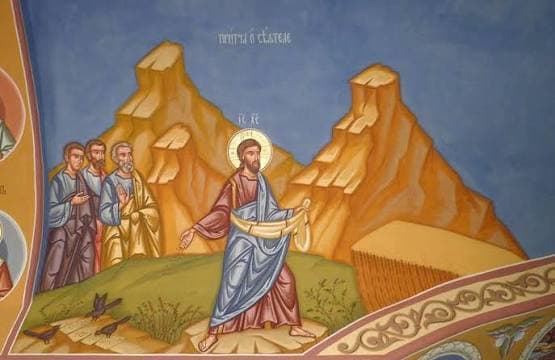
It follows therefore that when God sows His Word into the human heart, He offers us nothing less than the very presence of His beloved Son. He does not simply communicate truths about Himself; He gives us Himself. He desires to plant within us the radiant and joy-filled presence of Christ. How extraordinary this is! The God who transcends every limitation of time and space, who is ineffable and incomprehensible, nevertheless desires communion and to be intimately united with us. He desires not merely to bestow heavenly gifts upon us—which indeed He does—but to give us His very Self. The great question posed by the parable for us is this: How will we receive this Word? What kind of soil will the Word of God find within us?
Within the Gospel, we are given a clear and coherent explanation of this parable. We are told that the Sower is God our heavenly Father, and the seed is His Word. It is the Word whom we encounter in the Scriptures; a Word whose teaching leads us from death to life; a Word who regenerates and renews us; the Word who proclaims the good news of the Kingdom and ushers us into its eternal reality. There is something profoundly beautiful in the image of the seed itself. A seed fulfils its purpose by falling into the earth and, in a mysterious sense, dying so that new life might emerge. Christ, the divine Seed, does precisely this. Out of His immeasurable love for us, He descends into the earth. He dies upon the Cross and enters the tomb, and through His death destroys death, bestowing life upon those in the tombs. The Seed therefore already contains life within itself. We do not create that life; our task is to cultivate the soil in which it can unfold.
The parable makes clear that this Seed is scattered everywhere. As St John Chrysostom (d. 407AD) beautifully observes, the Sower “scatters the seeds freely and without distinction.” [1] God does not sow only upon soil that He knows will be fruitful. He sows everywhere. Even knowing that some will reject Him, His love remains indiscriminate in its generosity. He offers the gift of His beloved Son to all. St Gregory Palamas similarly describes Christ as “the One who ever sows the seed of eternal life [ὁ ἀεὶ σπείρων τὸν σπόρον τῆς αἰωνίου ζωῆς].” [2] Christ ceaselessly offers Himself to the human person. Through the prophets, through the commandments, through the Gospel, through the life of the Church and through the innumerable movements of His grace, God continually calls humanity into communion with Himself.
The challenge, therefore, lies neither with the Seed nor with the generosity of the Sower. The question is the condition of the soil—are our hearts going to be cultivated in such a way that we might be receptive to the word of God? And in the parable, Christ describes four responses to His Word. Some seed falls upon the path and is trampled underfoot: the Word is heard but dismissed immediately. Other seed falls upon rock. It begins to grow, but because it has no depth, it cannot establish roots within the hearts of people and eventually it withers. Other seed falls among thorns. Here the seed actually begins to grow, but the cares and riches and pleasures of life gradually choke it, and it never reaches maturity. Finally, some seed falls upon good soil: those who hear the Word, “hold it fast in an honest and good heart, and bear fruit with patient endurance.”
It is perhaps the image of the thorns that speaks most powerfully to our contemporary condition.
Our difficulty is not necessarily that we have consciously rejected God. For many of us the danger is far more subtle. The Word has been sown. We receive and believe God’s word. We hear the Gospel. We pray. We participate in the life of the Church. Yet the soil of the heart can become so crowded that the Seed is given little room in which to grow. We live surrounded by endless distractions. Our senses are continually stimulated; our minds move restlessly from one thing to another; responsibilities press upon us; there is always another task, another message, another concern demanding our attention. Even when we hear the Word of God, almost immediately something else occupies the mind. The Seed has been sown, but we do not always give it the stillness in which to take root.
And notice that Christ does not say that all the thorns are necessarily evil things. He speaks also of the ‘cares’ of life. Work must be done. Families must be cared for. Responsibilities must be fulfilled. These are good and necessary things. Yet even legitimate concerns, when they occupy the entire field of the heart, can become thorns. They can leave us so preoccupied with earthly life that the Word of God, although present within us, is never permitted to mature and bear its fruit. We devote considerable time each day to the needs of the body, to our work, our homes and our countless responsibilities. Yet how easily we can neglect the needs of the soul. The soul, too, requires attention. We become so pre-occupied with matters of this life that we leave little if no room to nurture our soils. This is why the parable is not simply a description of four kinds of people. It is a summons addressed personally to every one of us: cultivate the soil of your heart!
The parable is an important reminder that we need moments each day in which the distractions around us are allowed to subside, so that, in the presence of God, we might become attentive to what is taking place within us. It is often only in such stillness that we begin to recognise the “thorns” that have quietly grown within the heart. Perhaps it is anger towards another person. Perhaps resentment that we continue to carry. Perhaps anxiety about something that has happened or something that may happen. Perhaps envy, pride, an unhealthy attachment, disappointment, fear—or simply the endless cares and distractions of life. When we are continually occupied, these movements can remain unnoticed. Worse still, we can begin to identify ourselves with them, imagining that this is simply who we are.
Yet the fathers of the Church remind us that such passions do not constitute the true nature of the soul. They may enter the soul and disturb it, but they do not belong to its deepest identity. Beneath them is the person whom God created: a human being created in His image, created for purity, peace, love and communion with Him. This is why stillness is so important. We become still not merely to escape the noise of the world but to see the condition of the soil within us. What is choking God’s Word in me? What needs to be uprooted? What needs healing? What am I carrying that I need to surrender to God?
And yet the purpose of removing the thorns is not simply to leave an empty field. Christianity is not primarily about suppressing desires or emptying ourselves of everything. We remove the thorns in order to make room for something infinitely greater. We make room for Christ. When the thorns are gradually removed, the Word of God is able to descend more deeply into the heart. A passage of Scripture that we may have read many times can suddenly open before us with extraordinary clarity. An awareness of God's love may unexpectedly arise within us. Gratitude may well up within the heart. We may behold the beauty of God's creation and suddenly find ourselves filled with wonder.
These things cannot simply be manufactured. They are gifts from above. We do not create the life contained within the Seed. Our task is to make ourselves receptive to it. And one of the most beautiful fruits that begins to emerge is joy: not the fleeting pleasure produced by constant stimulation, but the deeper and more enduring joy that arises from communion with God. Perhaps this explains one of the paradoxes of our age. We possess innumerable means of entertainment, comfort and stimulation, yet we can remain inwardly restless. We continually seek another experience, another distraction, another thing to occupy us. Perhaps the problem is not always that we need something more. Perhaps the soil of the heart has simply become too crowded.
The tragedy of distraction, therefore, is not merely that it wastes our time. It can deprive us of an entire interior world that God desires to open before us. We can know everything that is happening around us and yet know very little about what is happening within us.
But when the noise begins to subside, we may discover something remarkable: God has not been absent at all. His Word was there; His grace was there; His love was there. We had simply become too distracted to perceive them. This, then, is the invitation of today's Gospel: give some attention each day to the soil of your heart. Read a little of the Gospel slowly. Stand quietly before God in prayer. Allow yourself moments without noise and distraction. Examine what is taking place within you. And when you discover a thorn—anger, resentment, anxiety, pride, envy—do not despair. Bring it before Christ. Through repentance, prayer and God’s grace, begin patiently to uproot it. And then leave room for God to act.
May we therefore ask ourselves each day: What kind of soil am I offering Christ today? And may we have the courage, with God's grace, to cultivate the soil of our hearts so that Christ—the eternal Word and Seed of everlasting life—may take root within us and bring forth His abundant fruit; so that His joy may become our joy, His life our life, and His eternal Kingdom our true home.
[1] St John Chrysostom, Commentary on St Matthew the Evangelist, PG: 57:467: “For just as the Sower makes no distinction between the portions of the field before him, but scatters the seeds freely and without discrimination, so Christ likewise makes no distinction between rich and poor, wise and unwise, negligent and diligent, courageous and timid. Rather, He speaks to everyone, fulfilling His own part, even though He knows beforehand what the outcome will be."
[2] St Gregory Palamas, Homily 47 on the Parable of the Sower. Γρηγορίου τοῦ Παλαμᾶ, Ἅπαντα τὰ ἔργα, τόμος 11, Ὁμιλίες ΜΓ–ΞΓ΄, series Ἕλληνες Πατέρες τῆς Ἐκκλησίας (ΕΠΕ), Thessaloniki: Το Βυζάντιον, 1986, p. 116.
About The Authors
![Associate Professor Philip Kariatlis [Faculty & Staff > Sub-Dean]](/_next/image?url=https%3A%2F%2Fimages.ctfassets.net%2Fgaf4nq7icj7m%2F2nXIBGMsV4DAw4M8a0rU2%2F442690adeed7d589266c127d16969212%2FFrame_15602__1_.webp&w=1920&q=75)
Sub-Dean
Associate Professor Philip Kariatlis
Associate Professor Philip Kariatlis is Sub-Dean and Associate Professor of Theology at St Andrew’s. After taking an undergraduate degree in Theology from St Andrew’s (Sydney College of Divinity), he graduated from the University of Sydney with a degree in Arts, majoring in Modern Greek. He received a Master of Theology and a doctorate from the Sydney College of Divinity, where he studied under Pr...