Theology & Life
The Joy of Life in Christ: A Reflection on Luke 10:16–21
“Nevertheless, do not rejoice at this, that the spirits submit to you,
but rejoice that your names are written in heaven.”
Luke 10:20
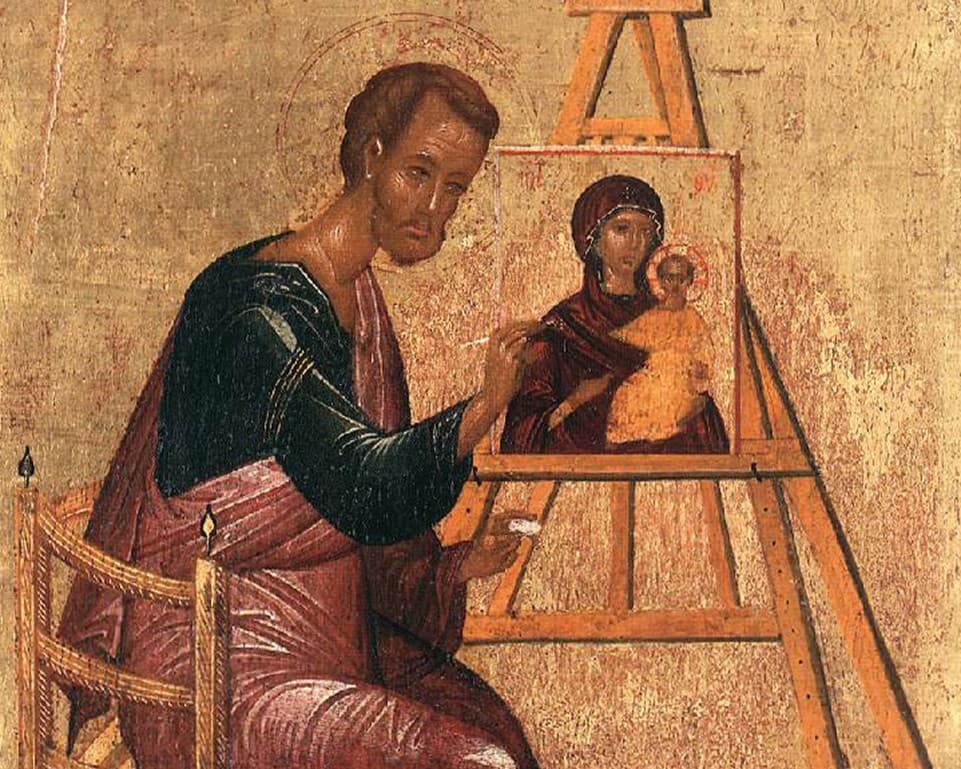
All too often, we lose sight of the fact that Christianity, in its deepest essence, is a message of profound and abiding joy. This truth needs to be reclaimed today, particularly in a world where Christianity is frequently misunderstood as a religion defined primarily by burdensome duties and obligations, rather than by the joy-filled experience of communion with the living Christ. It is precisely this misconception that the Sunday Gospel reading, coinciding with the feast of St Luke the Evangelist (18 October), seeks to dispel. It calls us back to the very heart of our faith: the joy of encountering Christ, discovering His transformative presence in our lives, and finding in Him the fullness of life for which every human heart ultimately longs.
This joy is neither fleeting nor dependent upon life’s changing circumstances. Rather, it is rooted in Christ Himself, who, through His death upon the Cross and glorious Resurrection, has not only granted us the forgiveness of sins but also opened wide the gates of eternity. Herein lies the answer to one of humanity’s deepest yearnings: a life extending beyond the narrow confines of our fleeting years. As the Psalmist beautifully proclaims, “In your presence there is fullness of joy; at your right hand are pleasures forevermore” (Ps 16:11). Indeed, what greater joy could there be than to discover that we are loved by God with a love that not even death itself can extinguish? To know that His unwavering desire is our salvation, and that His providential care can transform even life’s most painful circumstances into opportunities for spiritual growth.
It is precisely this promise that lies at the heart of the Gospel passage (Lk 10:16–21). In just a few verses, Christ redirects His disciples’ attention from the remarkable works they have accomplished in His name towards something infinitely greater: the gift of eternal life in communion with God. He declares: “Rejoice that your names are written in heaven [χαίρετε δὲ ὅτι τὰ ὀνόματα ὑμῶν ἐγγέγραπται ἐν τοῖς οὐρανοῖς]” (Lk 10:20). In these words, our Lord reveals the true foundation of Christian joy: not what we achieve or experience in this world, but the astonishing truth that, through Christ, we have been called to share in the very life of God. Indeed, how can our hearts not be filled with profound joy and abiding peace at the knowledge of God's immeasurable love for us, and at the promise of that life “in all its abundance” (cf. Jn 10:10) which He so graciously bestows upon us—a life that finds its ultimate fulfilment in the eternal joy of His heavenly Kingdom, where we are forever held in His loving remembrance?
The setting and content of this Gospel passage are distinctive to St Luke’s account of Christ’s earthly ministry. In the preceding verses, we learn that Christ appointed a wider circle of disciples, the seventy, whom He commissioned, like the Twelve Apostles, to proclaim the coming of God’s Kingdom. He instructed them to travel without the customary provisions: “Carry no purse, no bag, no sandals” (Lk 10:4). They were to enter the homes of those who welcomed them, offer peace, heal the sick and, above all, announce: “The Kingdom of God has come near to you [ἤγγικεν ἐφ' ὑμᾶς ἡ βασιλεία τοῦ θεοῦ]” (Lk 10:9).
This was—and remains—a remarkable proclamation! In the person of Jesus Christ, the seemingly unbridgeable gap between heaven and earth has been overcome. God Himself has drawn near to humanity, not merely to reveal something of His divine mystery, but to invite us into communion with Him. The Kingdom of God is no longer a distant or inaccessible reality, but a living possibility opened to every human person. The disciples, therefore, were not simply communicating a new teaching or announcing a future hope. They were proclaiming that, in Christ, eternal life had entered human history. The joy of God’s Kingdom is not merely something awaiting us beyond the grave; it is a reality of which we are invited to partake even now.
The Gospel reading begins with the joyful return of the seventy disciples, filled with enthusiasm at all they had witnessed and accomplished. Their excitement is palpable as they exclaim with spontaneity: “Lord, in your name even the demons submit to us!” (Lk 10:17). One can only imagine the impact of their mission upon those who encountered them. Here, we have a wider circle of Christ’s followers proclaiming the Gospel with authority and performing miraculous deeds in His name. Yet, at precisely this moment of elation, Christ redirects their attention towards something of far greater significance.
He does not diminish their accomplishments but invites them to recognise that there is something more important than even the most astonishing miracles. Christ declares: “I saw Satan fall like lightning from heaven” (Lk 10:18). These words reveal Christ’s authority over the powers of evil and, read in light of the Church’s tradition concerning Satan’s fall through pride, remind the disciples that spiritual power is no guarantee of one’s ultimate destiny. True greatness cannot be measured simply by authority or achievement. Rather, the deepest source of human joy lies in the assurance that we are eternally known, cherished and held within the boundless love of God.
And then come the words at the very heart of today’s Gospel: “Nevertheless, do not rejoice at this, that the spirits submit to you, but rejoice that your names are written in heaven” (Lk 10:20). This is a compelling declaration! Christ tells His disciples that their greatest cause for rejoicing is not the miracles they have performed, nor the success of their mission, but the fact that their names are written in heaven. They have been called into a relationship with God that transcends the limitations of earthly existence and opens before them the boundless horizon of eternity.
Indeed, our Lord elsewhere describes the fulfilment of our eternal destiny in the most beautiful terms: “Enter into the joy of your Lord” (Mt 25:21). The fullness of human joy, therefore, is not ultimately found in the passing experiences of this present life, but in our participation in the eternal joy of God Himself, where we shall behold the ineffable beauty and radiance of His divine glory. Yet this joy is not merely a distant promise. It begins even now through our living communion with Christ and will find its perfect fulfilment in His heavenly Kingdom.
What makes this Gospel passage even more moving is what follows. St Luke tells us that, at that very moment, Christ Himself rejoiced in the Holy Spirit: “At that same hour Jesus rejoiced in the Holy Spirit [Ἠγαλλιάσατο τῷ Πνεύματι τῷ Ἁγίῳ]” (Lk 10:21). The Greek verb ἠγαλλιάσατο, from ἀγαλλιάω, conveys more than ordinary happiness: an overflowing joy, a deep and irrepressible gladness.
And what occasions this rejoicing? The revelation of God’s saving purposes to those who receive Him with simplicity and humility. As Christ declares: “I thank you, Father, Lord of heaven and earth, because you have hidden these things from the wise and the intelligent and have revealed them to infants” (Lk 10:21). Here we encounter something profoundly moving. Not only does Christ call His disciples to rejoice in the gift of eternal life, but He Himself rejoices in the fulfilment of the Father's saving purpose. Christian joy is therefore not simply our joy in God; it is also, mysteriously, the joy of God in drawing humanity into communion with Himself.
What, then, does all this mean for us today? Perhaps the most important question we need to ask ourselves is this: Where do we ultimately seek our joy? So much of our lives is spent pursuing things we hope will bring happiness and fulfilment: achievements, possessions, professional success, recognition and countless other experiences. None of these is necessarily wrong; indeed, many are gifts for which we ought to be grateful. Yet how often do we discover that the satisfaction they bring is short-lived? We attain something for which we have longed, only to find ourselves searching for something more. Perhaps we are asking of the passing things of this world something they can never ultimately provide: a joy that does not fade, a love that cannot be lost, and a life that will never end.
It is here that the words of St Isaac the Syrian (seventh century) become particularly illuminating. Reflecting upon the joy that comes from experiencing God’s love, the saint writes: “The joy that is in God is stronger than the present life.”[1] In this striking declaration, St Isaac reminds us that there is a joy so liberating that neither the passing of time, nor life’s trials, nor even death itself can extinguish it. Its source is not found in anything destined to pass away, but in the eternal love of God. Indeed, he goes on to say that, for the person who has tasted something of this divine joy, “every sweetness of this world seems superfluous”,[2] since nothing can compare with the sweetness of knowing God.
The Gospel passage, therefore, invites us to rediscover a truth we so easily forget: the Christian life is not simply about fulfilling religious obligations, observing commandments, or striving to become morally better people, important though these may be. It is, above all, about entering into a living relationship with Christ and discovering in Him a joy that transforms our entire existence. This does not mean that we will be spared life’s difficulties and sorrows. Rather, when we begin to experience Christ’s presence, even our struggles can be seen in a different light. We discover that we are sustained by a love greater than our weaknesses, failures and fears—a love that accompanies us through this life and promises to carry us beyond the grave.
Upon reflection of the Gospel, therefore, we are invited to take to heart the words of our Lord: “Rejoice that your names are written in heaven.” We are reminded not to allow the preoccupations of daily life to obscure this magnificent promise. And lastly, we are invited to rediscover the joy of belonging to Christ—a joy that begins even now, deepens through our communion with Him, and finds its ultimate fulfilment when we, too, are invited to hear those beautiful words: “Enter into the joy of your Lord” (Mt 25:21).
As we strive to experience this joy, may our daily prayer, therefore, be:
Come, Holy Spirit, into our lives and cleanse us from every impurity, that our Lord and Saviour Jesus Christ may come and make His permanent abode within us. May He bestow upon us the gift of “living water”, becoming within us “a spring of water gushing up to eternal life” (cf. Jn 4:10, 14). For notwithstanding our sinfulness, our unworthiness and our utter dependence upon His grace—“apart from me you can do nothing” (Jn 15:5)—may we be led into the joyous and loving presence of our heavenly Father and His Kingdom, where “the sound of festival is unceasing and the pleasure is endless of those who behold the indescribable beauty of your countenance. For you are that which is truly desired and the inexpressible gladness of those who love You.”[3] O Holy Trinity, “and all creation praises You.”
[1] Ascetical Homilies, Homily 38, 297.
[2] Ibid.
[3] Thanksgiving Prayer after Holy Communion.
About The Authors
![Associate Professor Philip Kariatlis [Faculty & Staff > Sub-Dean]](/_next/image?url=https%3A%2F%2Fimages.ctfassets.net%2Fgaf4nq7icj7m%2F2nXIBGMsV4DAw4M8a0rU2%2F442690adeed7d589266c127d16969212%2FFrame_15602__1_.webp&w=1920&q=75)
Sub-Dean
Associate Professor Philip Kariatlis
Associate Professor Philip Kariatlis is Sub-Dean and Associate Professor of Theology at St Andrew’s. After taking an undergraduate degree in Theology from St Andrew’s (Sydney College of Divinity), he graduated from the University of Sydney with a degree in Arts, majoring in Modern Greek. He received a Master of Theology and a doctorate from the Sydney College of Divinity, where he studied under Pr...