Theology & Life

The Parable of the Samaritan Looking Beyond Ourselves: Discovering God’s Gift of Eternal Life Through Love
The parable of the Good Samaritan (Luke 10:25–37) brings us to the very heart of the Christian faith, revealing how the gift of eternal life—that most precious and inestimable gift bestowed upon humanity by God, and the very purpose for which every human person was brought into existence—may be received, embraced, and truly experienced in our lives. What is particularly striking about this Gospel account is the clarity with which our Lord reveals that eternal life is not attained merely through an intellectual understanding of the faith, nor is it measured by the extent of our theological knowledge. Rather, eternal life is inseparably bound to love: a living and wholehearted love for God, which finds its most authentic and tangible expression in our love for our fellow human beings. Indeed, the parable reminds us that the truth of our faith is ultimately revealed not simply in what we know or profess, but in the extent to which that faith is embodied in acts of genuine compassion, mercy, and self-giving love to those around us.
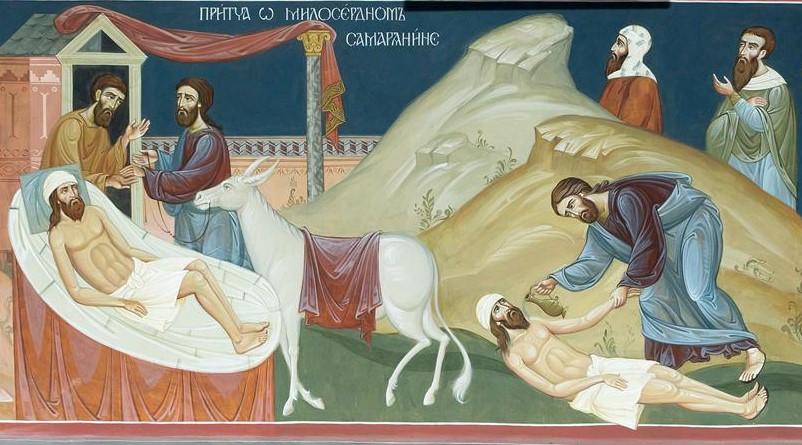
The Gospel account begins by introducing us to a certain lawyer who approaches Jesus. Unlike our contemporary understanding of the term, a lawyer in the time of Christ was an expert in the Jewish Law of Moses—someone who had devoted himself to the careful study, interpretation, and teaching of the sacred Scriptures. Yet, what is particularly striking about this encounter is that the lawyer approaches Christ not with a sincere desire to learn from Him, but, as the Evangelist Luke explicitly tells us, with the intention of putting Him to the test—“he stood up to challenge him” (Lk 10:25)—perhaps even hoping to expose some inconsistency in His teaching. Despite the questionable motives underlying his approach, the question he poses is arguably the most profound and consequential question that any human person could ever ask: “Teacher, what must I do to inherit eternal life? [διδάσκαλε, τί ποιήσας ζωὴν αἰώνιον κληρονομήσω;]” (Lk 10:25). This brings to light the very purpose for which we were created: not only for this life, but for another existence, forever in the glory-filled presence of God.
What is particularly compelling about the brief exchange that follows is that the lawyer already knows the answer to his own question concerning the way to eternal life. Indeed, he is able to recite it almost effortlessly from the sacred Scriptures: “You shall love the Lord your God with all your heart, and with all your soul, and with all your strength, and with all your mind; and your neighbour as yourself [ἀγαπήσεις Κύριον τὸν Θεόν σου ἐξ ὅλης τῆς καρδίας σου καὶ ἐν ὅλῃ τῇ ψυχῇ σου καὶ ἐν ὅλῃ τῇ ἰσχύϊ σου καὶ ἐν ὅλῃ τῇ διανοίᾳ σου, καὶ τὸν πλησίον σου ὡς σεαυτόν]” (Lk 10:27). He knows the Scriptures; he understands the commandments; and he can most certainly articulate with remarkable precision what God asks of us. Yet, herein lies a profound spiritual truth: there is an enormous difference between knowing the commandments of God and allowing them to transform our lives so that they become a way of life in our daily interactions with those around us. For all his theological learning, the lawyer appears to have overlooked something fundamental: that faith is not simply something to be studied, discussed, or admired, but a divine reality to be embraced and lived.
Rather than allowing the commandment of love to challenge him personally, he seeks instead to justify himself by asking Jesus, “And who is my neighbour?” (Lk 10:29). Perhaps, so absorbed had he become in his own knowledge, and even in his sense of spiritual accomplishment, that he had lost sight of its ultimate purpose and meaning to life: to open and allow himself to enter into a deeper communion of love with God and his fellow human beings. For the true measure of our faith lies not merely in how much we know about God, but in how profoundly that knowledge has transformed our hearts, enabling us to receive His boundless love and, in turn, to extend that same love to others. Indeed, it is precisely when the truth of our faith becomes a lived reality of compassion, mercy, and self-giving love that we begin to experience something of the fullness of the divine life to which we have all been called.
The passage continues with the well-known story of the Good Samaritan. We are told that there was a man who, whilst travelling along the desolate road from Jerusalem to Jericho fell into the hands of robbers; they stripped him of his clothing, beat him and left him half dead. In desperate need of care and assistance, the wounded man lay helpless by the roadside. Three people subsequently passed along that same road: a priest, a Levite and a Samaritan. Yet, quite remarkably, it was only the third who stopped to offer the compassion and care that the wounded man so desperately required. What is particularly revealing is that first two were men of God and yet they were indifferent passing by without offering assistance. They saw the wounded man but failed to respond to his suffering.
Perhaps, herein lies one of the greatest spiritual challenges of our own time: we too can become so absorbed in the busyness of our own daily lives, so preoccupied with responsibilities and commitments that we gradually lose sight of the needs of those around us—even those closest to us. Indeed, very often what is required is not even a question of being called upon to perform some extraordinary act of generosity or sacrifice. It may be something as simple as taking the time to respond to someone who has reached out to us with a telephone call, a message or an email. It may be making the effort to visit someone who is lonely; to offer a word of encouragement to someone who is struggling; or simply to ask after a person whom we know is passing through a difficult time. Indifference can take root in our hearts—and not necessarily that we may be lacking in compassion—but because we have allowed the demands of life distract us from what ultimately matters.
This is precisely what makes the parable so challenging for each and every one of us. The priest and the Levite did not themselves inflict any harm upon the wounded man. Their failure was not in some evil they had committed, but in the good they had neglected to do. And herein lies a profound spiritual truth: our Christian vocation is not simply to avoid doing wrong, or simply observing certain moral rules—one would imagine that both the priest and the Levite were ‘good’ men—but to become ever more attentive to the needs of others; not merely to refrain from causing suffering, but to become instruments of God’s compassion and healing in the world. For love, as Christ reveals in this parable, is never simply a noble sentiment or an abstract ideal. It is something that must find expression in the concrete circumstances of our everyday lives, often through the smallest and simplest acts of kindness.
Ultimately, the question that Christ places before each of us is not simply whether we profess to love God and those around us only in words, but whether that love finds genuine expression in our actions and attentiveness to those who stand before us in need. Indeed, returning to the original question posed by the lawyer in the Gospel reading, “what must I do to inherit eternal life?”, Christ reveals that we open ourselves to the sweet fragrance of eternal life by allowing God’s love to become manifest in our relationship with others through our actions! For it is precisely through our love for those around us that we demonstrate our love for God. And this is beautifully seen in the loving actions of the Samaritan!
The parable of the Good Samaritan becomes even more remarkable when we recall that Samaritans at the time were regarded with considerable suspicion and hostility by the Jewish religious community. Yet remarkably, it was this Samaritan, an outsider in the eyes of many who revealed what it truly means to love. He alone allowed what he saw with his eyes to touch his heart. He alone was “moved with compassion” (Lk 10:33). He alone interrupted his journey drawing near to the wounded man and willingly setting aside his own plans to attend to the suffering of a complete stranger. Not only did he tend to the man’s wounds, pouring oil and wine upon them and carefully bandaging them, but he also placed the wounded man upon his own animal, took him to an inn and personally cared for him. What’s more, the following morning, he took out his own money and entrusted it to the innkeeper, asking him to continue caring for the wounded traveller, and promising that whatever additional expenses might be incurred, he himself would repay upon his return.
What an extraordinary expression of love! The Samaritan gives not merely something of what he possesses, but something of himself: his time, his attention, his resources and, above all, his heart. He does not ask who this man is, where he comes from, what he believes, or whether he is deserving of his help. He sees before him simply a fellow human being in need, and that is enough. For him, love is not an abstract principle or a religious ideal to be admired from a distance. Love becomes an action, a concrete expression of mercy, a willingness to make another person's suffering his own concern. It is precisely this love expressed in action that we, too, are called to embody in our lives: to love our neighbour as ourselves and to recognise, in the face of every human person, Christ Himself.
* * *
There is a beautiful story recounted by St Porphyrios of Kafsokalyvia, one of the great contemporary saints of our Church, which brings the message of the Gospel vividly to life. [1] The saint relates a story an elderly monk who lived in the desert with two younger disciples. One day, he writes, they were preparing to attend a vigil at a neighbouring monastery. Because the journey was long, the elder instructed his two disciples to set out ahead of him so that they could arrive in good time and help prepare for the service. He himself would follow later.
As the two young monks made their way through the desert, they came upon a man lying on the roadside, seriously injured and crying out for help. The poor man pleaded with them to carry him to the nearest village, warning that if they left him there, he would surely die. But the monks replied that they could not stop. They had been instructed to arrive at the monastery in time to prepare for the vigil. And so, despite the man’s desperate pleas, they continued on their way.
Some hours later, the elderly monk travelled along the same road. When he came upon the injured man, he immediately stopped, approached him and asked what had happened. The man explained that two young monks had passed by earlier but had been too busy to help him as they were making their way to a religious service. The elder, moved with compassion, took the wounded man upon himself and carried him towards safety. His journey was interrupted, his plans were set aside, and he did not reach the monastery for the vigil.
And herein lies the profound beauty of this story. The two younger monks arrived at the monastery in time for the service but failed to recognise the call of God in the suffering man before them. The elder, on the other hand, missed the service, but fulfilled its deepest purpose: to become a genuine expression of God’s love and compassion. What a powerful reminder that our worship of God—and by extension our spiritual life more broadly— must never become separated from our love for our neighbour.
[1] Wounded By Love (Limni, Evia, Greece: Denise Harvey Publisher, 2005), 188-189.
About The Authors

Sub-Dean
Associate Professor Philip Kariatlis
Associate Professor Philip Kariatlis is Sub-Dean and Associate Professor of Theology at St Andrew’s. After taking an undergraduate degree in Theology from St Andrew’s (Sydney College of Divinity), he graduated from the University of Sydney with a degree in Arts, majoring in Modern Greek. He received a Master of Theology and a doctorate from the Sydney College of Divinity, where he studied under Pr...