Theology & Life
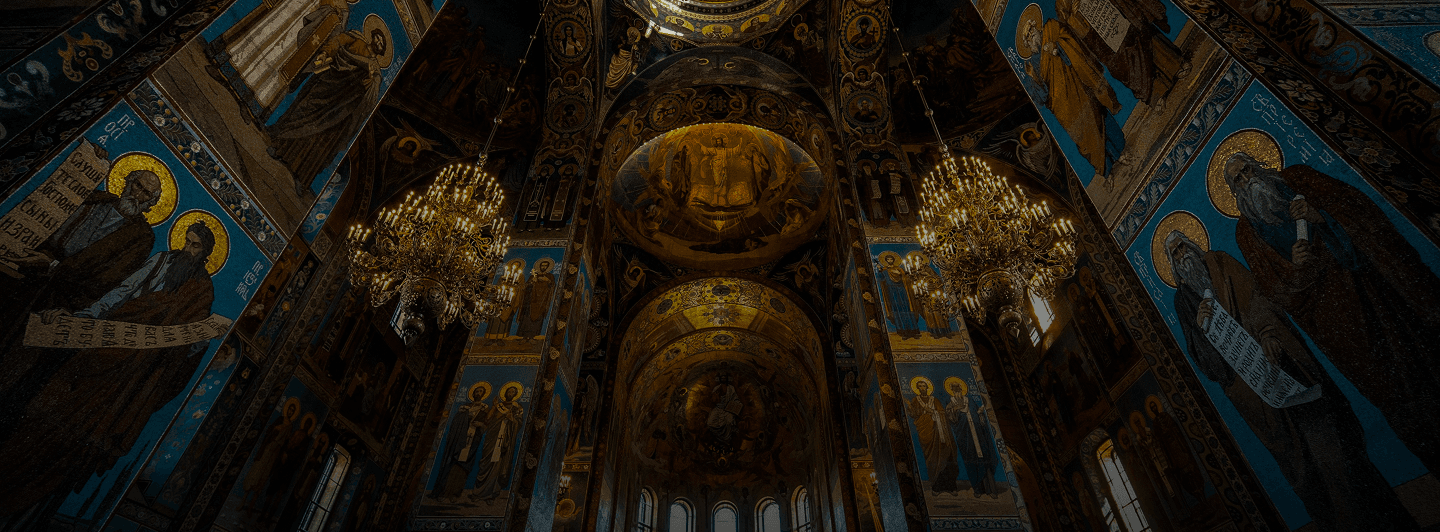
August: The Month of the Most Holy Theotokos
Associate Professor Philip Kariatlis
August is a month of exceptional liturgical richness. It is the month which, more than any other, is lovingly dedicated to the Most Holy Theotokos. On the fifteenth of August, the Church celebrates the glorious Feast of her Dormition—her “falling asleep”—when the Virgin Mother was ‘translated into eternal life’, as we sing in the hymns of the day, by her Son. In preparation for this great feast, the Church, in all her wisdom, offers us the daily Paraklesis Services. These beautiful supplicatory services invite us to gather in prayer, not only to express our filial love and devotion to the Mother of God, but also to implore her unfailing intercessions before her Son and our Lord. Indeed, there is scarcely an Orthodox Christian who does not experience a profound sense of warmth, consolation, trust, and spiritual security upon hearing the Church’s hymns dedicated to the Theotokos—not only throughout these blessed days of August, but throughout the entire liturgical year.
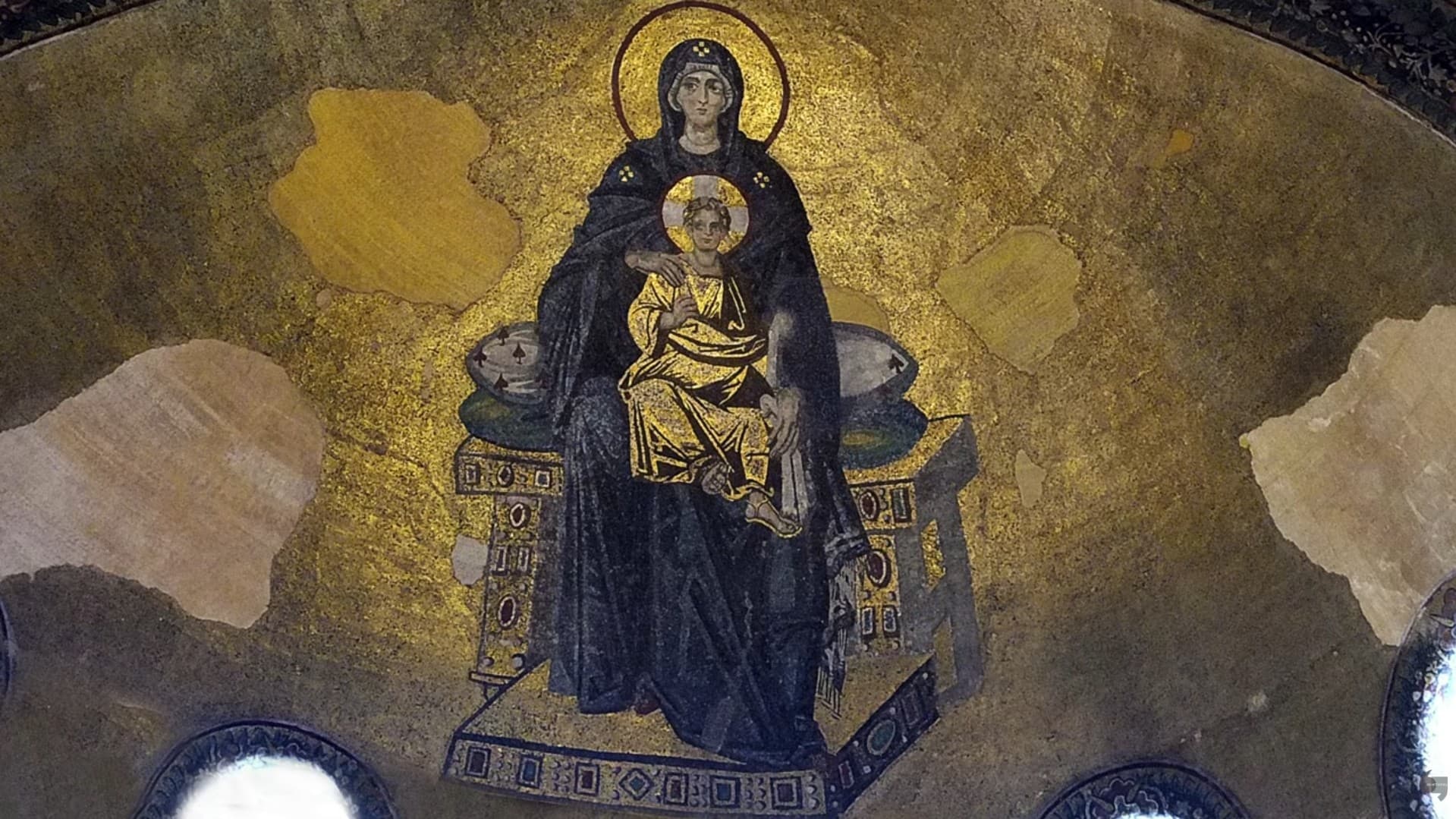
The reason why the Virgin Mother occupies such a unique and honoured place within the Orthodox Church—both within her liturgical life, but also within the Church’s spirituality—is due to her uniquely significant role in giving birth to the eternal Son and Word of God. Honouring her for this, the faithful instinctively seek refuge beneath her maternal protection, particularly in times of trial, sorrow, and uncertainty. She is invoked as the “Protection of Christians, Champion undefeated, Mediator most sure with our Creator.” The faithful turn to her in their distress, entrusting to her their anxieties and petitions. Yet, we also look to her life as the supreme example of what it means to live wholly for Christ. In her we behold the perfect image of authentic humanity—a person entirely receptive to the grace of God, wholly responsive to His love, and completely united to His divine will.
One of the resurrectional hymns sung at Sunday Orthros clearly reveals her role in the world’s salvation:
“Virgin Theotokos, we extol you in hymns, through whom came the salvation of our race (Σὲ τὴν μεσιτεύσασαν τὴν σωτηρίαν τοῦ γένους ἡμῶν, ἀνυμνοῦμεν Θεοτόκε Παρθένε). For your Son and our God, who is benevolent, accepted the Passion and the Crucifixion in the flesh which He assumed from you, and through them delivered us from corruption.”
In only a few lines, this hymn encapsulates the mystery of our salvation. It reminds us that the redemption accomplished through the death and resurrection of Christ became possible because the Virgin freely and lovingly consented to God’s eternal plan. Through her voluntary obedience, the eternal Word truly became one of us. She offered to Him not merely her assent, but her very flesh, her life, and her entire being. The body that hung upon the Cross was the very body He received from her. Her participation in the mystery of salvation was therefore neither incidental nor passive; it was deeply personal, sacrificial, and freely embraced. She was present at Bethlehem when He entered the world, and she remained steadfast at Golgotha when He offered Himself for the life of the world. Her entire life was marked by unwavering faith, courageous obedience, and self-emptying love.
This profound mystery explains why the Orthodox Church has developed such an extraordinarily rich hymnographical tradition in honour of the Mother of God. Throughout the liturgical books we encounter a whole range of different hymns to the Virgin Mother. Some of these include: the Theotokia, the Dogmatika, the Stavrotheotokia, the Triadika with their Marian conclusions, the Megalynaria, the Axion Estin hymns, the Paraklesis services, the Akathist Hymn, and the Festal Theotokia. Each of these serves a distinct theological purpose within the Church’s proclamation of the mystery of Christ. The Dogmatika, for example, safeguard and proclaim the doctrine of the Incarnation; the Theotokia weave the mystery of the Word made flesh throughout the Church’s daily cycle of prayer, continually reminding the faithful of the Theotokos’ indispensable role in the economy of salvation; the Stavrotheotokia contemplate with profound tenderness the mystery of the Cross through the eyes of the sorrowing Mother (these are especially moving hymns); the Paraklesis hymns express the Church’s unwavering confidence in her maternal intercession; while the Akathist Hymn poetically celebrates the entire economy of salvation accomplished through Christ.
Together, these hymns constitute a magnificent hymnographic theology of the Theotokos in her relation to Christ. They do not glorify her in isolation or as an end in herself, but do so, precisely because through her “the Word became flesh and dwelt among us” (Jn 1:14). Her greatness, therefore, lies entirely in her relationship to Christ and in her free participation in God’s saving work. For this reason, every Marian hymn ultimately directs our gaze to her Son, continually proclaiming the mystery of the Incarnation through which the salvation and deification of the human race became possible. In this way, the Church’s hymnography beautifully echoes the words of St Paul, who writes that “when the fullness of time had come, God sent forth His Son, born of a woman… so that we might receive adoption as children” (Gal 4:4). That brief yet profound expression, “born of a woman,” contains within it the whole mystery of the Virgin’s participation in the divine economy.
The Virgin Mother is therefore honoured because of the incomparably significant role she fulfilled in the mystery of our salvation. Through her humble and wholehearted response to the Archangel—“Behold the handmaid of the Lord; let it be to me according to your word” (Lk 1:38)—the eternal Son and Word of God assumed our human nature from her. In the ineffable mystery of the Incarnation, God the Word united Himself to our humanity “without confusion, without change, without division, and without separation.” Through the Theotokos, heaven and earth were united, God and humanity were reconciled, and the path to our salvation was opened. For this reason, the Church rightly and joyfully honours her as the Theotokos—the “Bearer of God”—for the Child whom she conceived, bore, and nurtured is none other than God incarnate, through whom the whole world has received life and salvation.
About The Authors
![Associate Professor Philip Kariatlis [Faculty & Staff > Sub-Dean]](/_next/image?url=https%3A%2F%2Fimages.ctfassets.net%2Fgaf4nq7icj7m%2F2nXIBGMsV4DAw4M8a0rU2%2F442690adeed7d589266c127d16969212%2FFrame_15602__1_.webp&w=1920&q=75)
Sub-Dean
Associate Professor Philip Kariatlis
Associate Professor Philip Kariatlis is Sub-Dean and Associate Professor of Theology at St Andrew’s. After taking an undergraduate degree in Theology from St Andrew’s (Sydney College of Divinity), he graduated from the University of Sydney with a degree in Arts, majoring in Modern Greek. He received a Master of Theology and a doctorate from the Sydney College of Divinity, where he studied under Pr...