Theology & Life
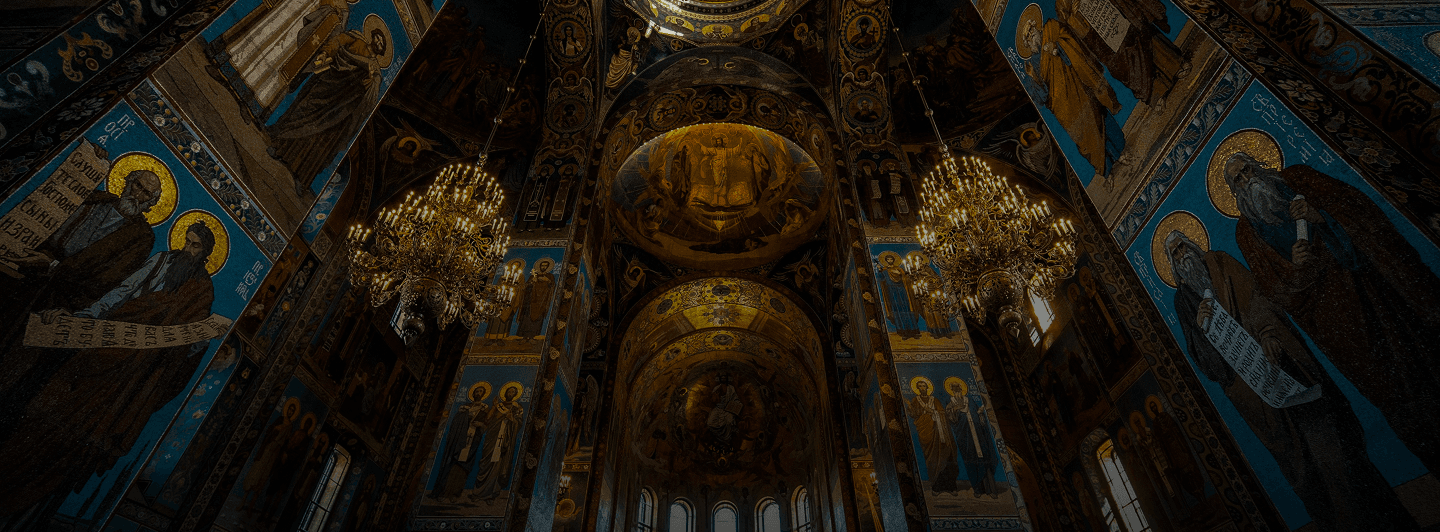
The Dormition of the Theotokos: From the Fullness of Time to the Fullness of Life
August is a month which is liturgically rich; one, which, as we all know is pre-eminently dedicated to the Holy Virgin Mother. On the 15th of August, we celebrate the significant feast of the Dormition—or the ‘falling asleep’—of the Theotokos. And, in order to properly prepare us, the Church, in all her wisdom, provides us with the Paraklesis Services, on a daily basis, giving us the opportunity to come to Church, not only in order to express our love to her but to ask her also to intercede to her Son and our Lord. Moreover, the Church enters a period of fasting to help the faithful reorientate their attention towards our Virgin Mother and ‘her translation into life’. Indeed, during the month of August, there would hardly be an Orthodox Christian whose heart is not drawn with particular devotion to the Virgin Mother; who does not experience a sense of warmth and joy, a sense of trust and protection upon hearing all the wonderful hymns ascribed to the Virgin Mother during this sacred period.
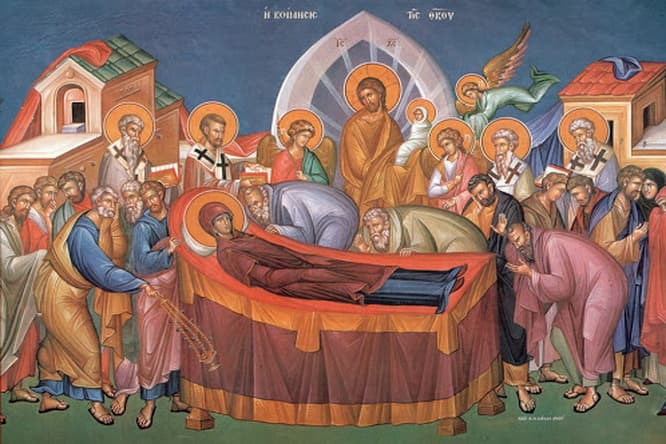
In celebrating the Dormition of the Theotokos, the hymns of the Church make it abundantly clear that it is not the ‘end’ of Mary’s life that we are commemorating, but, quite the contrary, it is her very beginning—namely, her entrance into eternal blessedness brought about by her ultimate surrender freely to God! The Vesperal hymns, for example, begin with: “[Ὤ τοῦ παραδόξου θαύματος…], Marvel at the wondrous mystery, the fount of life has been laid in a tomb and yet her tomb has become a ladder to heaven above”. In the dismissal hymn of the day, the Church sings: “[Ἐν τῇ κοιμήσει … μετέστης πρὸς τὴν ζωήν], In your falling asleep, O Theotokos… you were transported to life.” It follows, therefore, that in observing this important feast day to the Theotokos, we see that death becomes the means through which the Virgin Mother truly lives. That is, the Dormition commemorates death, and yet, quite paradoxically, the theological vocabulary of the feast is overwhelmingly the vocabulary of life. The Mother of Life is placed in a tomb, yet the tomb becomes a “bridge leading those on earth to heaven.” [1] She falls asleep, yet she is translated into life. It is precisely for this reason, that the Dormition is cause for celebration, cheer, merriment, and solemn joy.
As we pause to reflect and celebrate her life and what it may mean for us in our present context, we realise first and foremost her pre-eminence not only within the Church but also in our life as well. Especially during times of trials and sorrows, Orthodox Christians seek refuge in Panagia, as they see her as a “protector of Christians, champion undefeated, mediator most sure with our Creator.” We cry out to her to help us in times of need, we turn to her in order to learn from her life, how we too might live a life centred on Christ; she is for us, an inspiring example and an uplifting paradigm of what it means to be a genuine human being. Her life, from the very beginning, through to the Annunciation and finally the Dormition was one marked by trust and surrender to the will of God. Indeed, it is this quality which constituted, through her death, her entrance at the same time into the eternal horizons of Paradise. The words of St Paul that we find in his letter to the Galatians are equally and totally applicable to her. In that letter we read: “May I never boast in anything except the Cross of our Lord Jesus Christ, by which the world has been crucified to me and I to the world” (Gal 6:14). Indeed, throughout the year, perhaps the most beautiful hymns dedicated to the Virgin Mother are those which are referred to as the Stavrotheotokia. Profoundly Christological in character, they depict Mary standing beside the Cross steadfast in her discipleship to her Son. Even through this most difficult moment—having to witness her Son suspended dead on the Cross—her trust in God remained steadfast and unwavering.
For the Virgin Mother, it could unreservedly be said that Christ had indeed become the defining centre of her entire existence. It is precisely in this sense that St Paul’s expression, “to boast in the Cross,”may be applied to her. Like the Apostle, the Virgin Mother’s relationship to the Cross went far beyond reverence or profound admiration: the Cross revealed the One upon whom her entire life rested, in whom all her hope was grounded, and from whom her life derived its ultimate meaning. Like her fiat at the Annunciation expressed her complete self-offering to God, so her silent presence at Golgotha became a compelling witness that she had relinquished every claim to possess her life as her own. Her initial “Let it be to me according to your word” (Lk 1:38) that she uttered upon hearing that she would give birth to the eternal Son and Word of God was now lived to its most demanding depths as she stood faithfully beside her crucified Son.
In this sense, the words of St Paul acquired a most striking resonance in her: “the world has been crucified to me, and I to the world” (Gal 6:14). For the Virgin Mother, this “world”—understood here not as God’s good creation, but all those external and ephemeral realities that seek to possess the human heart exercised no ultimate dominion over her. Transient honours, worldly securities and material comforts could not define or possess her, because her deepest treasure lay elsewhere. Indeed, at Golgotha, her deepest Treasure hung before her upon the Cross. And because her heart belonged wholly to Him, even in the darkness of the Cross she remained steadfastly oriented towards the One who alone was the source of her life, her hope and her joy. We see again a life given wholly and freely to God; a life which freely consisted precisely in belonging entirely to Him.
Her trust and complete surrender to God that we saw both at the Annunciation—“behold the handmaid of the Lord, let it be to me according to your word” (Lk 1:38)—and by the Cross—where she remained by the One to whom she had surrendered her heart and entire existence—comes into view now at her Dormition. Having orientated her whole life towards Christ, her Dormition reveals, precisely through her self-offering and complete abandonment to God, what has now become of death. Through the death and Resurrection of her Son, Jesus Christ, death itself has been transformed: no longer the final boundary of human existence, it has become a passage into the life that Christ has bestowed upon the world. In the Virgin Mother, however, this gift of eternal life is not simply an objective promise awaiting fulfilment at the end of her earthly existence. It is a reality she had already begun to appropriate and embody throughout her life, through her continual desire to conform her will to the will of God and to entrust herself ever more completely to Him. Her Dormition therefore discloses the ultimate consequence of a life lived in this orientation: the one who has given herself wholly to Christ discovers that even death cannot separate her from Him.
In the same way that throughout her entire life she had received Christ, at her Dormition, she is now received by Christ into eternal life. The one who held her infant child and remained faithful to Him throughout her entire life, is now held eternally within the eternal embrace of Son in God’s kingdom. It is precisely for this reason that on her Dormition, paradoxically, we celebrate because we are reminded that death has lost its sting; we come to see all that our Lord accomplished on the Cross—namely, the abolition of death, the bestowal of eternal life and the gift of His kingdom—given now to humanity as pure grace. Death is but an entrance into life! Her Dormition is therefore not simply the conclusion of a holy life, but its fulfilment: the final blossoming of that ‘ultimate surrender’ to God which had characterised her entire existence.
The Feast Day of the Dormition is a most compelling reminder therefore of the hope with which we too are called to live in this life: transient and fleeting that it is. In the same way that, in the case of the Virgin Mother, death was experienced as life, so too can this become our experience as well in our ‘final’ moments here on earth. That is to say, in having the Mother of God as our pre-eminent example in this life—to the extent that She truly embodies what it means to live a Christ-loving and Christ centred life—we too are able to live with the future hope of our Lord’s gift and promise of unending life to us, to the extent, of course, that we truly desire and seek to live by His love—in all that we do—in this life. This is the quintessential message of the feast! Through her ‘death’, the Virgin Mother provides the much-needed confidence and conviction that death can in fact become an act of truly living for all. What’s more, death need not be understood as that harrowing moment when we are plunged into soul-destroying darkness and horrifying non-existence; on the contrary, our physical death, as it was for our Virgin Mother, can become a passageway for us into life and into our Lord’s eternal kingdom, where His loving presence and embrace will forever reign; and where His unfading and resplendent light with eternally shine.
[1] Kathisma, Sunday Orthros, Pl. 1st Tone.
About The Authors
![Associate Professor Philip Kariatlis [Faculty & Staff > Sub-Dean]](/_next/image?url=https%3A%2F%2Fimages.ctfassets.net%2Fgaf4nq7icj7m%2F2nXIBGMsV4DAw4M8a0rU2%2F442690adeed7d589266c127d16969212%2FFrame_15602__1_.webp&w=1920&q=75)
Sub-Dean
Associate Professor Philip Kariatlis
Associate Professor Philip Kariatlis is Sub-Dean and Associate Professor of Theology at St Andrew’s. After taking an undergraduate degree in Theology from St Andrew’s (Sydney College of Divinity), he graduated from the University of Sydney with a degree in Arts, majoring in Modern Greek. He received a Master of Theology and a doctorate from the Sydney College of Divinity, where he studied under Pr...