Theology & Life
What Must I Do to Have Eternal Life? The Rich Man and the Gift of Salvation
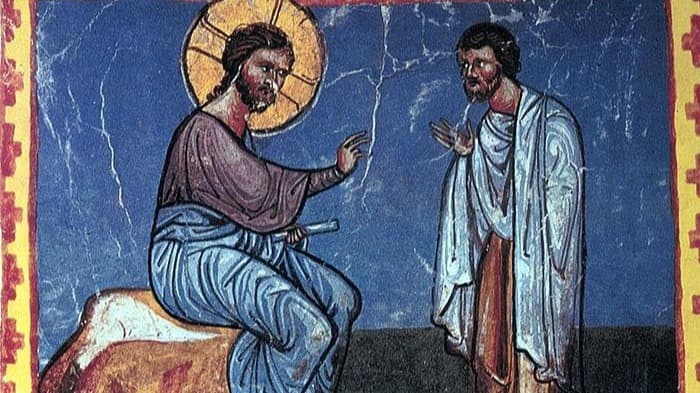
The Gospel passage recounting story of the rich man, who approaches Jesus asking what he must do to inherit eternal life (Mt 19:16-26), presents a remarkably complete and comprehensive vision of salvation. Within the span of just eleven verses, our attention is redirected to one of the most fundamental questions that at some stage in life we must all confront, especially as this earthly life comes to an end: that is, the means by which we might come to receive God’s gracious gift of eternal life. Indeed, the encounter between Jesus and the rich man provides, as it were, a kind of “road map” leading towards the fullness of life with God for all eternity. Indeed, the profound importance of this Gospel passage lies precisely in its powerful reminder that the question of eternal life—namely, of how the enduring and unfading joy of God’s Kingdom might become a reality in our lives—is of infinitely greater significance than any accomplishment, achievement or accolade that might be bestowed upon us in the course of this earthly life. Accordingly, the enduring significance of this story lies in that it concerns what Christ elsewhere calls “the one thing needful” (Lk 10:42): namely, the ultimate purpose and goal of human existence—communion with God for all eternity.
That the question asked of the rich man, “what good deed must I do to have eternal life?” (Mt 19:16) reaches to the very pinnacle and goal of human existence, is expressed with particular force elsewhere in the Gospel, where Jesus asks: “For what will it profit them to gain the whole world but forfeit their life?” (Mk 8:38). These words offer a stark reminder that the highest purpose of this life is not to gain the world, however impressive its achievements or alluring its promises may be, but rather to open ourselves freely to receive from God that which this world could never bestow: the gift of eternal life in communion with Him. As the encounter between Jesus and the rich man unfolds, our attention is drawn to three interrelated dimensions concerning the attainment of God’s eternal kingdom. Firstly, the importance of keeping God’s commandments; secondly, and more profoundly, a human heart free from everything that might possess it; and thirdly, indeed, most importantly, the revelation by Christ that, despite all that we might do, salvation ultimately remains a gift of God’s grace. Put another way, there is nothing that we could ever do—however extraordinary our own efforts or initiatives may be—that could ever earn us a rightful place within God’s eternal kingdom, without this first having been freely offered to us by God.
More specifically, what makes this passage especially compelling is the clarity with which it reveals the path towards the unending joy of God’s eternal Kingdom, while holding together two essential overarching dimensions of salvation: its gratuitous character as the gift of God’s superabundant love for the world and the requisite free reception and acceptance on the part of the human person to respond to His call to ‘follow Him’ who loved us first. Specifically, this response on our part finds concrete expression in our striving to align our lives with the life of God through the keeping of His commandments and our surrender to whatever might possess the human heart. But in all this, we are reminded that whilst effort is required, this must not lead to self-reliance. Moreover, we are equally reminded that whilst we are called to relinquish all those realities that possess our heart, ultimately, we are called to be receptive and open to God’s gift of “life in all abundance” (Jn 10:10) to all or as we read elsewhere in the Gospels, our passage “from death to life” (Jn 5:24). In this way, the passage beautifully captures an important concept in soteriology; namely that of synergy. Indeed, this idea is beautifully captured by St Paul who writes, in his letter to the Philippians: “work out your own salvation with fear and trembling; for it is God who is at work in you, enabling you both to will and to work for his good pleasure” (Phil 12:12-13). It therefore follows that God takes the first step in gifting us with the joyous and resplendent gift of eternal life, but we too need to open ourselves to receiving this boundless gift of God’s love and mercy and truly desiring it.
Looking more deeply into the encounter between Jesus and the rich man, the first point to recognise is that the keeping of God’s commandments is in fact indispensable to the Christian life and to salvation. In the Gospel passage, Christ says plainly: “If you wish to enter into life, keep the commandments” (Mt 19:17). It is particularly moving that the rich man described in the Gospel, appears genuinely to have kept the commandments in his life and, by his own testimony, to have been conscientiously faithful in this endeavour. Beyond being wealthy, he was in fact characterised by piety and a God-fearing predisposition; he was a person occupied with questions of ‘ultimate’ and eternal significance, beyond his worldly success. Notwithstanding his wealth, Christ makes it very clear that any understanding of salvation that separates faith from adherence to God’s commandments is fundamentally mistaken. The Gospel according to St John makes it very clear that faithfully seeking to keep the commandments of God is an expression of our love towards Him. Christ says unequivocally: “If you love me, you will keepmy commandments” (Jn 14:15). In other words, we show our love for Christ by seeking to live our life in accordance with His commandments. In so doing, this dynamic—namely, the keeping of the commandments as an expression of our love—begins to shape and transform our life: forgiveness, mercy, purity of heart, humility, love of neighbour and enemies, generosity, self-denial—to name but a few characteristics—shape the life of the who strives to love Christ.
And yet, it is equally important to recognise that even the most faithful observance of the commandments neither earns our salvation nor places God under any obligation to save us. As St Mark the Monk strikingly observes: “Some, without keeping the commandments, think they are keeping the faith, while others, keeping the commandments, expect to receive the kingdom as a reward owed to them. Both are deprived of the kingdom.” [1]While essential, therefore, the commandments are not the means by which we can somehow ‘purchase’ God’s love and automatically secure our salvation. Simply put, eternal life is not transactional! In this regard, we must never imagine that, because we strive to keep the commandments and live a virtuous life, God somehow is obligated to grant us this precious gift of eternal life. Indeed, any belief that salvation can be secured through our own meagre human actions risks giving rise not only to pride and self-righteousness, but also an illusory self-sufficiency that ultimately becomes a stumbling block to salvation. The observance of the commandments, therefore, does not compel God to save us; rather it constitutes our free and loving response to a divine love already so freely and superabundantly bestowed upon all. Keeping the commandments therefore helps reorientate and open our life to God making room for the gift of God’s life-begetting love to permeate our life. By keeping these, our lives are progressively reorientated towards God, and our hearts are opened more fully to Him, making room for his life-giving, transformative and sanctifying grace to permeate our entire existence. Consequently, the Gospel passage makes it very clear that whilst the rich man had faithfully kept all the requirements of the Mosaic law, Christ was calling him further; something was still missing.
Together with striving to keep God’s commandments as a free expression of our desire to follow God’s ways, the Gospel reveals that we must also be ready to relinquish all those possessions which might have power over us, govern our life. Besides, elsewhere St Paul is explicit in revealing the preparatory nature of the Mosaic law; the fullness being our relationship with Christ. In his letter to the Galatians, he writes characteristically: “Therefore the law was our disciplinarian (παιδαγωγός) until Christ came…for in Christ Jesus you are all children of God through faith” (Gal 3:24-26). Christ says to the rich man: “If you wish to be perfect, go, sell your possessions, and give the money to the poor, and you will have treasure in heaven; then come, follow me” (Mt 19:21). Here Christ leads the rich man—and by extension all of us—beyond the simple observance of the commandments to something deeper: a readiness to follow Christ who loved us first—to enter into a relationship with Him—without holding anything back—that is, with an undivided heart. Salvation or eternal life, here, ultimately consists in receiving Christ wholeheartedly and surrendering entirely to Him rather than seeking security in anything transient and ephemeral that we might possess or might have accomplished in this life. If our treasure is in fact to be found in Christ, then even death cannot separate us from this; on the contrary, our death becomes our entry into the permanent and joyous presence of fellowship with Christ, our priceless and eternal Treasure. Ultimately, to follow Christ means a readiness on our part to take up our cross—that is the denial of the self and our unconditional entrustment to the love and mercy of God; not to property or even our own life.
Indeed, more than sacrificing property—as was asked of the rich man—we are called, more radically, to ‘die’ to ourselves—that is, a death to a self-autonomous existence; the relinquishment of a desire to possess, control and secure life entirely on our terms—in order to allow the life of Christ increasingly to become our life. It is precisely this paradox that Christ expresses elsewhere: “For those who want to save their life will lose it, and those who lose their life for my sake will find it” (Mt 16:25). Like the rich man, the person who seeks above all to preserve what they possess—their wealth, security, status, achievements, or even their sense of self-sufficiency—risks losing the very life they seek. By contrast, those who relinquish such securities for the sake of Christ discover a life infinitely greater than anything surrendered. It is for this reason that within the Church the faithful are reminded ‘again and again’: “let us commend ourselves and one another and our whole life to Christ our God.” In this way, the words of Christ to the rich man equally apply to all of us—not all may have excessive wealth, but we all have hesitations that do not allow the total surrender of our life to God. Like the rich man, we too may be seeking the gift of eternal life that Christ offers, whilst at the same time securely holding fast to this life. And importantly, just as in the keeping of the commandments, so too in our surrender and entrustment, these are not in any way an arbitrary ‘fee’ that we must pay to enter into eternal life; rather they constitute the forgoing of all hindrances that prevent the human person to saying ‘yes’ to the One who loves us and seeks to bestow upon us the gift of salvation and eternal life.
This brings us to the third and most important soteriological dimension: beyond keeping the commandments and relinquishing whatever might possess our hearts and hinder our surrender to the Source of Life, we must never lose sight of the fact that salvation remains entirely a gift of God’s grace; and that there is nothing that the human person could ever do to achieve this by their own effort alone. Within the Gospel passage, when confronted with the sheer difficulty, if not impossibility, of salvation particularly in light of the radical surrender to which Christ calls the disciples, they are depicted as asking in astonishment: “Then who can be saved?” (Mt 19: 25). Jesus responds with words that bring the entire encounter between Christ and the rich man to its theological climax. “For mortals it is impossible, but for God all things are possible” (Mt 19:26). The profound importance of these words lie precisely in that they redirect our understanding of salvation away from every form of human self-sufficiency and towards a radical dependence upon divine Grace. The tragedy of the rich man is not that he has failed to acquire the virtues—indeed, he had done remarkably well morally—but rather, when confronted by Christ’s invitation to follow Him, he is unable to surrender himself, and all that he has, and to accept the gift of eternal life being freely offered.
The passage ends having reminded us most profoundly that, in relation to salvation, it is first and foremost the gift of God’s superabundant grace that even makes possible the very response to which Christ invites us in the first place. Whilst the human response remains essential, underlying this and enabling this is in fact God Himself working within us. In this way, the Gospel passage holds together in profound harmony the two inseparable aspects of salvation: that salvation remains wholly and pre-eminently a gift of God’s grace, yet a gift that calls for our free and willing reception. Such is the invitation to salvation that God’s immeasurable and infinite love invites us all into—to partake of his eternal blessedness and beatitude; to enjoy that eternal and endlessly spacious horizon “where the sound of trumpet is unceasing and the pleasure is endless of those who behold the indescribable beauty of [His] countenance; for You are that which is truly desired and the inexpressible gladness of those who love You, Christ our God.” [2]
[1] St Mark the Monk, On Those Who Think That They Are Made Righteous By Work: Two Hundred and Twenty-Six Text, 18, found in the Philokalia, the complete text compiled by St Nikodemos of the Holy Mountain and St Makarios of Corinth, vol. 1. trans. G.E. Palmer, P. Sherrard and K. Ware (London: Faber and Faber, 1990), 126.
[2] Anonymous Prayer, Thanksgiving after Holy Communion.
About The Authors
![Associate Professor Philip Kariatlis [Faculty & Staff > Sub-Dean]](/_next/image?url=https%3A%2F%2Fimages.ctfassets.net%2Fgaf4nq7icj7m%2F2nXIBGMsV4DAw4M8a0rU2%2F442690adeed7d589266c127d16969212%2FFrame_15602__1_.webp&w=1920&q=75)
Sub-Dean
Associate Professor Philip Kariatlis
Associate Professor Philip Kariatlis is Sub-Dean and Associate Professor of Theology at St Andrew’s. After taking an undergraduate degree in Theology from St Andrew’s (Sydney College of Divinity), he graduated from the University of Sydney with a degree in Arts, majoring in Modern Greek. He received a Master of Theology and a doctorate from the Sydney College of Divinity, where he studied under Pr...