College News & Events
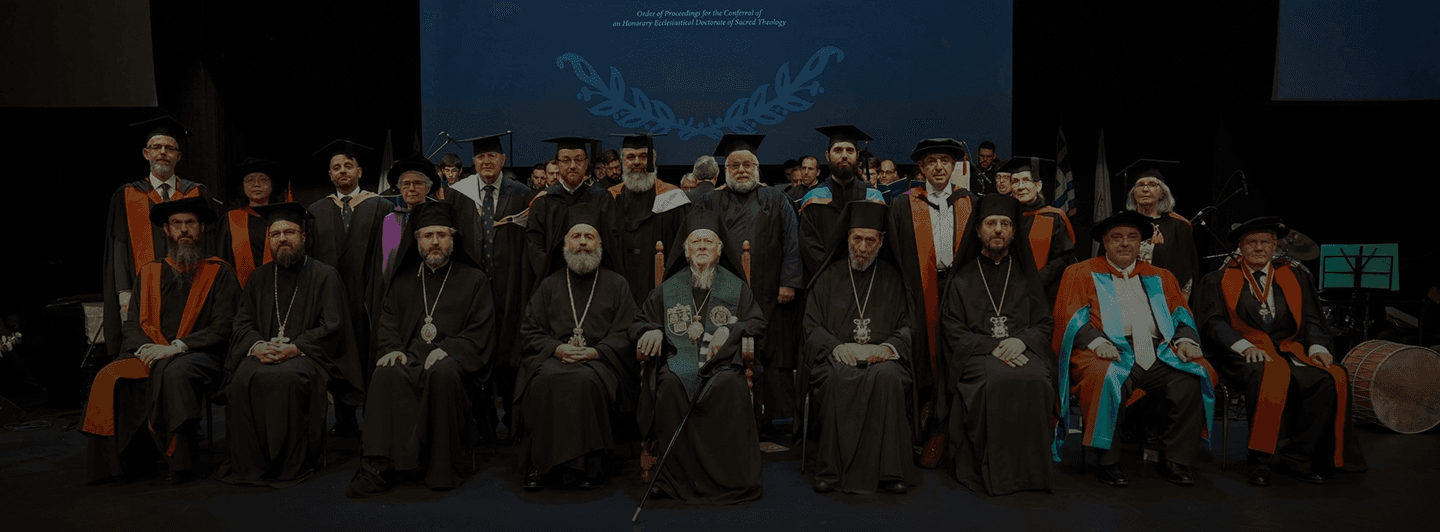
“Wisdom and Light”: Cathedral Talks Explore the Enduring Significance of Greek Philosophy
The first in a new series of Cathedral Talks, organised collaboratively by the Greek Orthodox Archdiocese of Australia, St Andrew’s Theological College and the Centre for the History of Philosophy at the University of Notre Dame Australia, was held on Monday evening, 17 August, at the Cathedral of the Annunciation of Our Lady in Redfern.
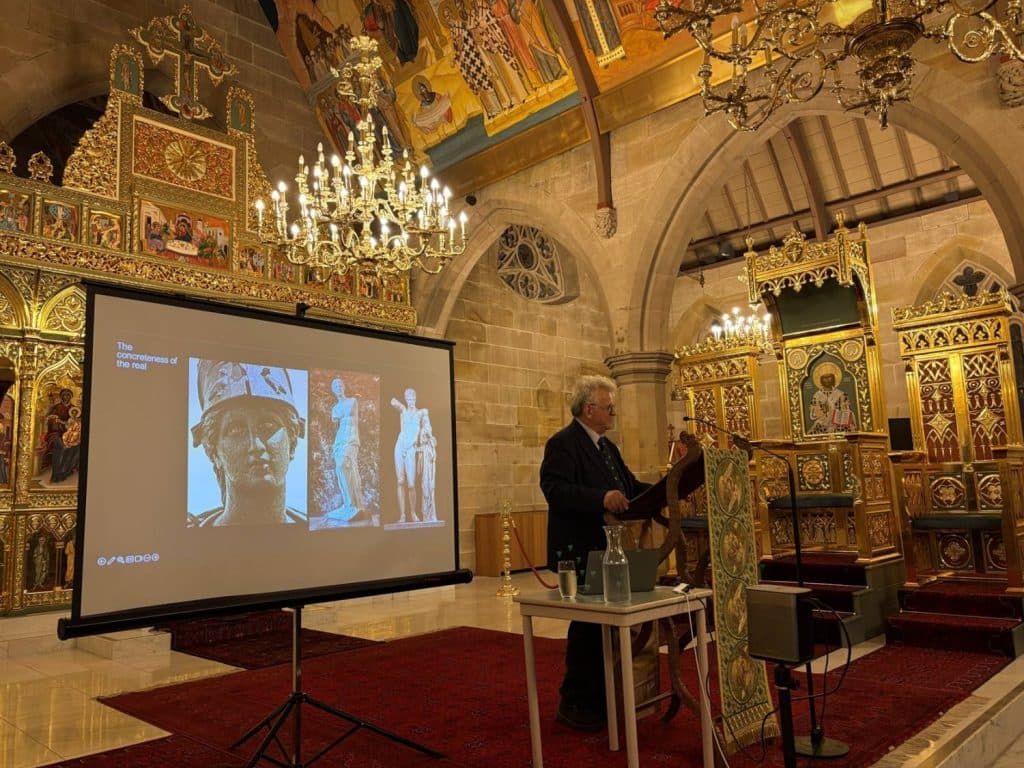
Entitled Wisdom and Light, the three-part series seeks to bring the enduring wisdom of the Greek philosophical tradition into conversation with the questions and concerns of contemporary life. In particular, the initiative explores the encounter between ancient Greek thought and Christianity, and the ways in which the Church Fathers received, transformed and brought to fulfilment many of the insights of the Hellenic philosophical inheritance.
The inaugural lecture was delivered by Professor Vrasidas Karalis, Sir Nicholas Laurantos Chair in Modern Greek and Byzantine Studies at the University of Sydney, who took those present on what might aptly be described as an Odyssean journey through the Greek philosophical imagination.
Professor Karalis offered a nuanced account of what he described as the fundamentally cataphatic orientation of the Greek worldview: an affirmation of the intelligibility, order and beauty of the cosmos and of the human capacity to encounter and articulate something of its meaning. Yet he was careful to show that this affirmation of existence was never naïve or simplistic. Behind the Greek celebration of beauty, harmony and reason there remained the persistent shadow of tragedy: suffering, darkness, mortality and, ultimately, the apparent hopelessness of the human condition before death.
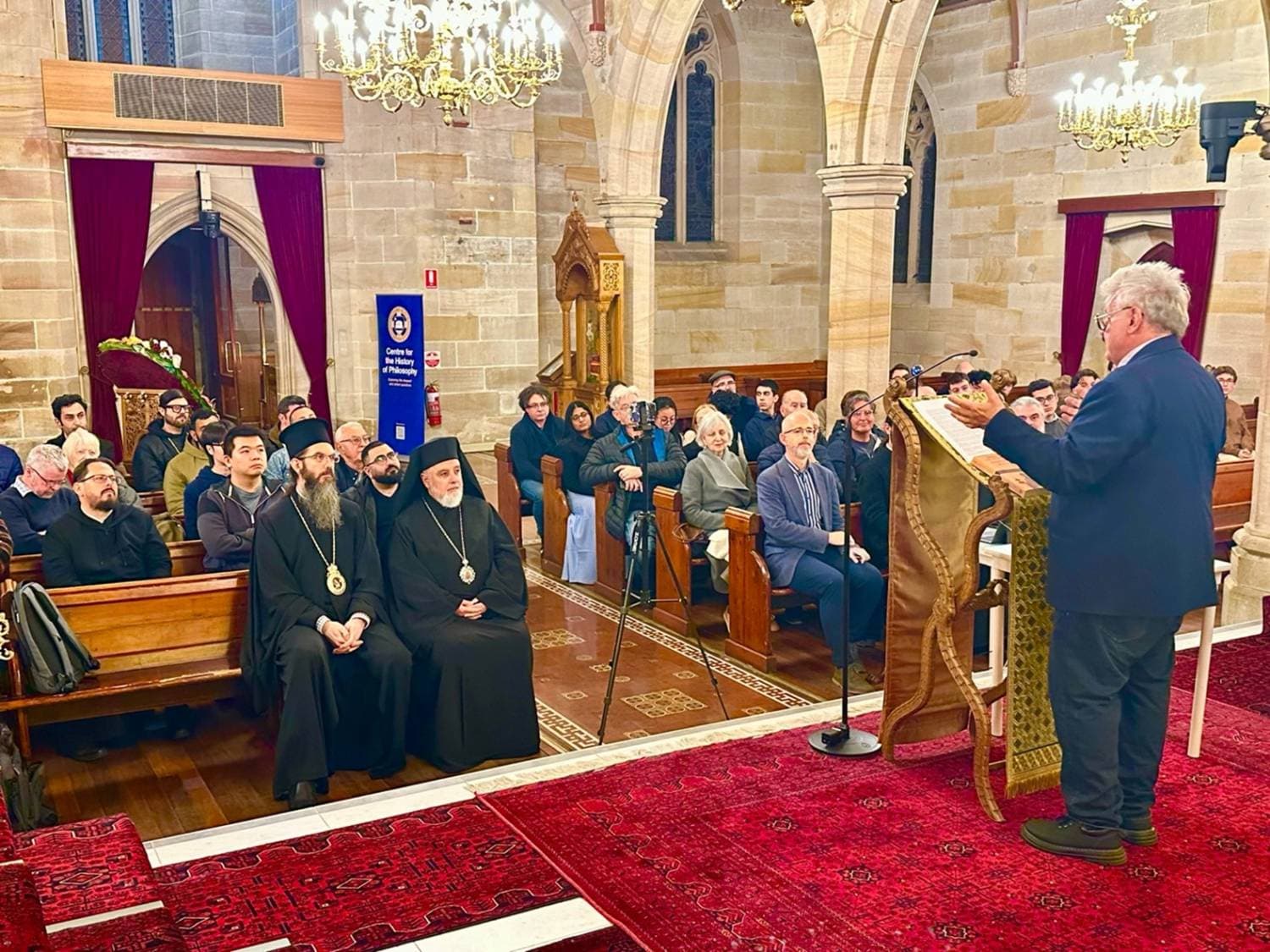
It is precisely at this point, Professor Karalis suggested, that the encounter between Greek philosophy and Christianity assumes particular significance. Christianity did not simply reject the philosophical inheritance of the ancient world. Rather, the Church Fathers critically received and transformed it, placing its deepest questions within the new horizon opened by the person of Jesus Christ. The tragic dimensions of human existence were not denied, but neither were they permitted to have the final word. Into the ancient world’s profound awareness of mortality and tragedy Christianity introduced the irreducible dimension of hope—a hope grounded ultimately in the victory of life over death. Moreover, Christianity opened a way beyond the necessity—ἀνάγκη—that bound the ancient philosophical worldview, revealing instead the possibility of a freedom that transcends even the inexorable necessity of faith.