- Home
- About us
- Students
- Courses
- Research
- Library
- News & Events
- Gallery
- Contact
- Our Blog
Latest News

St Athanasius and the Scriptures, Exemplified in His Letter to Marcellinus
Margaret Beirne, DTheol
Senior Lecturer
St Andrew’s Greek Orthodox Theological College
Abstract: This article begins with a brief overview of the place of the Psalms in the earliest Christian writings, from the New Testament through to the early patristic period. It then focuses on a rare gem among the works of St Athanasius, his Letter to Marcellinus on the Interpretation of the Psalms. In the first part of the Letter, Athanasius shows how the Psalms echo the whole of the Old Testament and herald the New. For the remainder, he demonstrates the rich variety of the Psalms and their eminent applicability to the spiritual life. It is argued that Athanasius’ classification of the psalms anticipates by many centuries the three criteria for determining genre described by the German scholar Hermann Gunkel (1862-1932) in his work An Introduction to the Psalms: The Genres of the Religious Lyrics of Israel, commonly regarded as a seminal work. Furthermore, Athanasius plumbs the depths of the second ‘criterion,’ by illustrating how praying the psalms, preferably in song, evoke the diverse moods and longings of the human heart.

Enrolments Now Open!
.jpg)
Study at St Andrew's

Subject Areas on Offer
Gallery
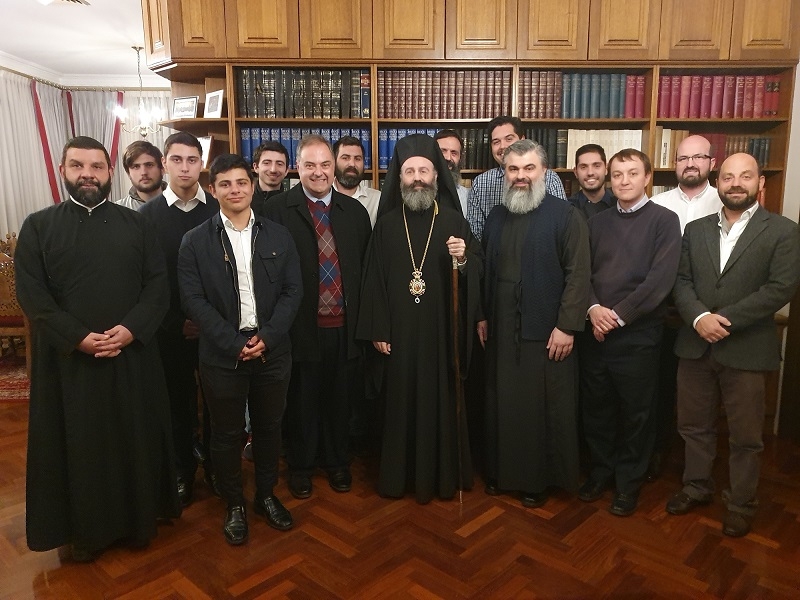
The Library

The library was established with the opening of St Andrew's in... see more
Subscribe to our Blog!
Subscribe to our blog written by our Faculty and learn more about your Orthodox Christian faith
Connect With Us
|
|
|
|
Join Our |


.png)
Copyright © 2019 St Andrew's Greek Orthodox Theological College.
All Rights Reserved. | Website Terms & Conditions