- Home
- About us
- Students
- Courses
- Research
- Library
- News & Events
- Gallery
- Contact
- Our Blog
Latest News

Determining the Historical Context of Theophanes of Nicaea's Theological Propensities
Dimitry Makarov, Professor of Patristics and Church History, The Russian Federal Pedagogical University at Yekaterinburg & Chair of Ecclesiastical History, Yekaterinburg Orthodox Theological Seminary.
Abstract: Theophanes III, Metropolitan of Nicaea (died ca. 1381) was one of the most important Palamite theologians of the outgoing 14th century. Nevertheless, he did not sign the Synodal Tome of 1368 condemning Prochoros Cydones. Starting from the inscription on fol. 1 of Mosq. Syn. Gr. 461, we put forward the hypothesis that Theophanes, as a prominent Hesychast, might have felt a craving for stillness (hesychia), like St. Gregory of Sinai and others. However, there also existed a certain “common domain” in theology between Theophanes, on the one hand, and the brothers Prochoros and Demetrios Cydones, on the other, which was due to their general interest in the decrees of the Iconoclast council of 754 and the rather diverse traditions of medieval Byzantine Platonism. Thus, the ‘language of mediation’, which describes the human soul of Christ as a mediator between His divinity and the flesh, is found in Leontius of Byzantium and the Iconoclasts, on the one hand, as well as in St Maximus the Confessor, St John Damascene, and St Philotheos Kokkinos, the teacher of Theophanes, on the other.

Enrolments Now Open!
.jpg)
Study at St Andrew's

Subject Areas on Offer
Gallery
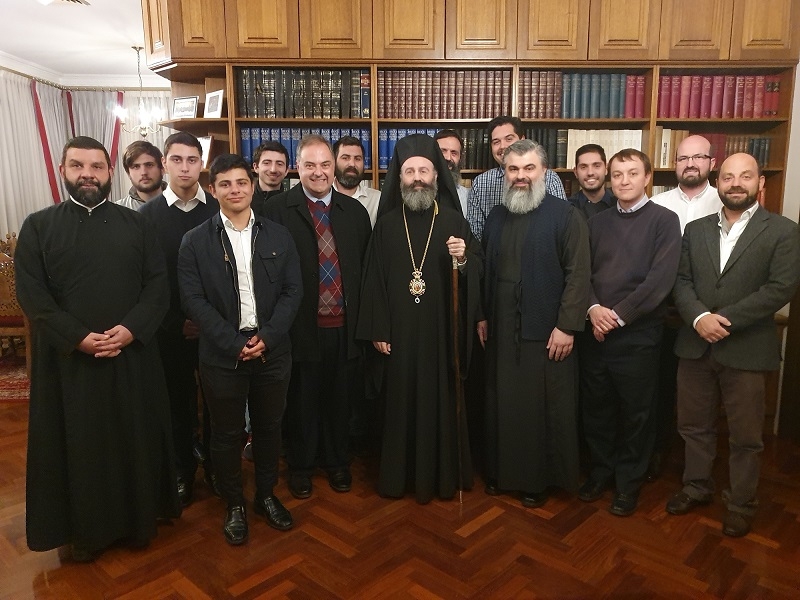
The Library

The library was established with the opening of St Andrew's in... see more
Subscribe to our Blog!
Subscribe to our blog written by our Faculty and learn more about your Orthodox Christian faith
Connect With Us
|
|
|
|
Join Our |


.png)
Copyright © 2019 St Andrew's Greek Orthodox Theological College.
All Rights Reserved. | Website Terms & Conditions