- Home
- About us
- Students
- Courses
- Research
- Library
- News & Events
- Gallery
- Contact
- Our Blog
Latest News

Reading the Passion Narrative with Didymus the Blind
Jonathan Douglas Hicks, PhD Candidate, University of Otago
Abstract: This paper undertakes a theological and ecclesiological reading of St John’s Passion and Resurrection narrative inspired by the typological presuppositions of Didymus the Blind. I argue that paying particular attention to Didymus’ baptismal typology makes us alert to an important narrative argument in John’s Gospel about the Holy Spirit and the Church. Namely, the mortifying activity of the Spirit on the Church’s behalf in John 19 is the necessary prequel to the abundant giving of the Spirit to the Church in John 20. This activity is signalled by the Son’s enigmatic handing over of the Spirit for the Church’s sake at the crucifixion. In highlighting the Trinitarian and typological dimensions of the Johannine Passion and Resurrection account, this paper contributes an interpretation of the latter as a narrative of the Church’s birth.

Enrolments Now Open!
.jpg)
Study at St Andrew's

Subject Areas on Offer
Gallery
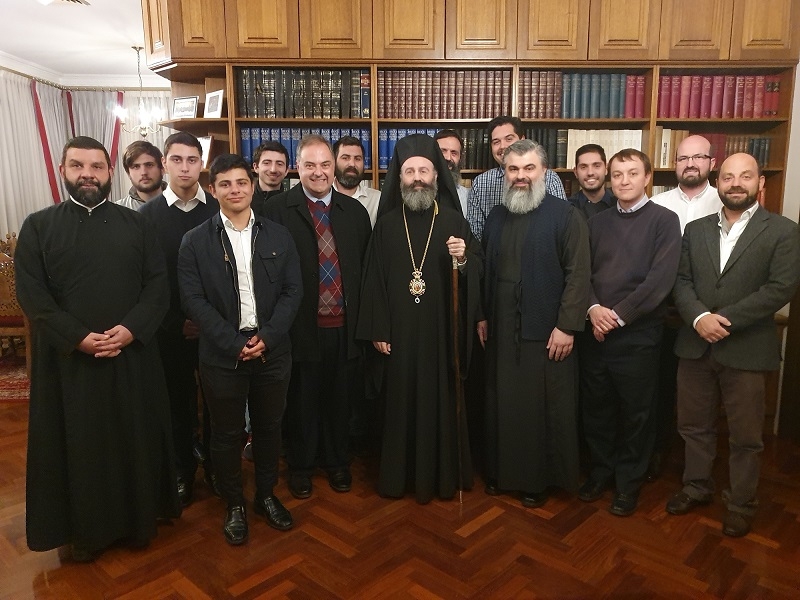
The Library

The library was established with the opening of St Andrew's in... see more
Subscribe to our Blog!
Subscribe to our blog written by our Faculty and learn more about your Orthodox Christian faith
Connect With Us
|
|
|
|
Join Our |


.png)
Copyright © 2019 St Andrew's Greek Orthodox Theological College.
All Rights Reserved. | Website Terms & Conditions