- Home
- About us
- Students
- Courses
- Research
- Library
- News & Events
- Gallery
- Contact
- Our Blog
Latest News

John Wesley and Athanasius on Salvation
Glen O’Brien, PhD
Associate Professor of Church History and Theology
Booth College
Abstract: Other than John Wesley’s description of William Wilberforce in 1791 as Athanasius contra mundum and his use of the same Latin phrase in his 1775 sermon On the Trinity, there is little discussion of Athanasius on the part of the founder of Methodism. However, the Orthodox tradition to which Athanasius is so central a figure had an important shaping influence on Wesley’s theology and there are strong soteriological resonances between Athanasius and Wesley, some of which will be elucidated in this paper. This comparative study demonstrates that Athanasius and Wesley were both ‘practical’ theologians in that their theology focused on the living experience of God in Christ through the Spirit. The redemption and transformation of human existence through God’s saving and sanctifying grace lay at the heart of their concern. This shared conviction indicates a degree of closeness rather than distance between the Eastern and Western theological traditions.

Enrolments Now Open!
.jpg)
Study at St Andrew's

Subject Areas on Offer
Gallery
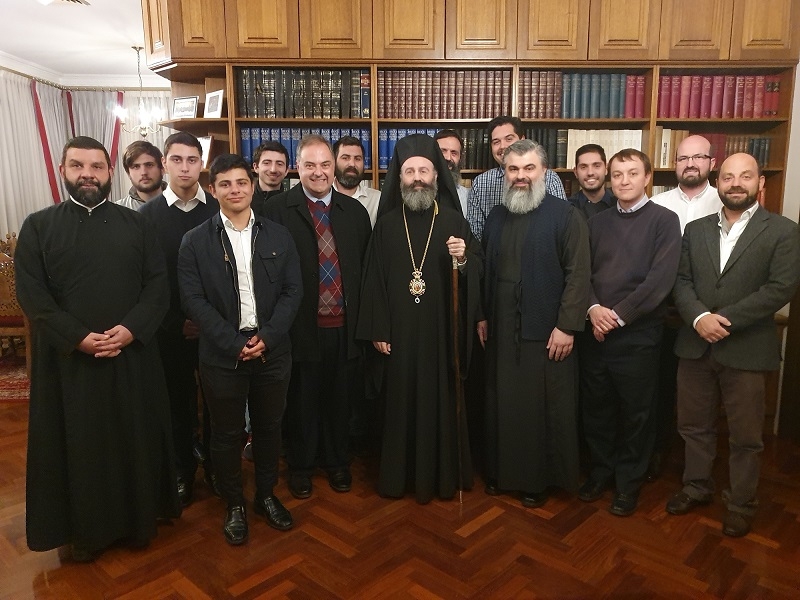
The Library

The library was established with the opening of St Andrew's in... see more
Subscribe to our Blog!
Subscribe to our blog written by our Faculty and learn more about your Orthodox Christian faith
Connect With Us
|
|
|
|
Join Our |


.png)
Copyright © 2019 St Andrew's Greek Orthodox Theological College.
All Rights Reserved. | Website Terms & Conditions