- Home
- About us
- Students
- Courses
- Research
- Library
- News & Events
- Gallery
- Contact
- Our Blog
Latest News

LUKAN LITERATURE
B9657A
Unit Weighting
9 cps
Type of Unit
Specialized
Prerequisites
B8570A
Academic Staff
Dr Margaret Beirne, RSC, BA (UNE 1973) MA (Weston 1978) BD (MCD 1984), MEd (UNSW 1986) DTheol (MCD 2000), Senior Lecturer
Curriculum Objectives
The course unit enables students to study the two volume work Luke-Acts which encompasses a gospel and an early Christian theological history. It can complete a Biblical major for students in AQF Level 7 Bachelor programs or advance Biblical Studies for students in AQF Level 9 programs.
Learning Outcomes
At the end of this unit students will be able to:
- Account at an advanced level for the complex historical, religious and social background of Luke-Acts.
- Explain the various literary forms used in the construction of Luke-Acts.
- Interpret the theological themes of Luke-Acts.
- Exegete select passages from the Gospel of Luke and the Acts of the Apostles using appropriate methodologies
- Construct liturgies, homilies or biblical discussion group materials on Luke-Acts.
Content
- The historical, religious and social context of Christianity in the late first century CE Mediterranean.
- Hellenistic history and biography of the last first century CE.
- The literary structure and various literary sub-forms used in Luke-Acts.
- The theological themes of Luke-Acts.
Assessment Profile
- Produce an independently researched interpretation of the relevance of a theological theme in Luke-Acts to its original historical context.
- Exegete a passage of Luke or Acts using appropriate methodologies.
Conduct a graduate seminar on an issue relevant to the pastoral application of Luke-Acts.
Schedule
3hr lecture per week on campus, or via distance education

Enrolments Now Open!
.jpg)
Study at St Andrew's

Subject Areas on Offer
Gallery
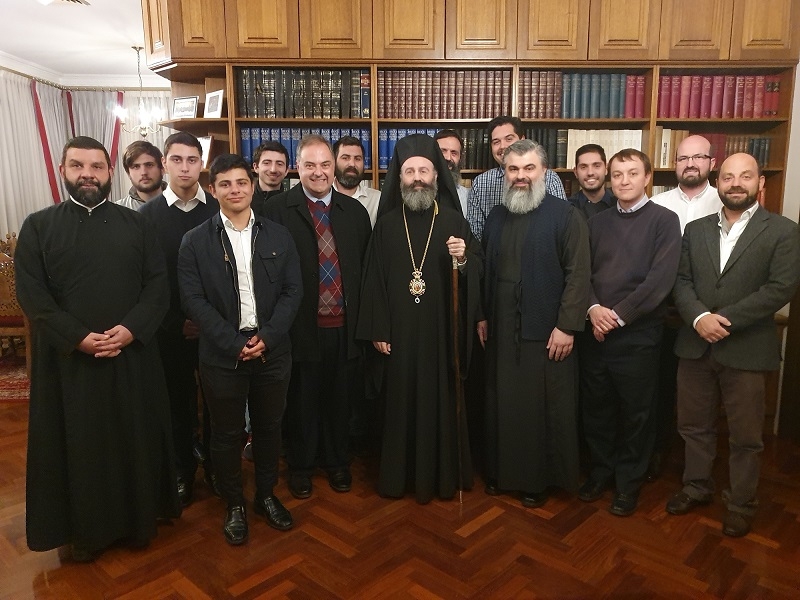
The Library

The library was established with the opening of St Andrew's in... see more
Useful links
Subscribe to our Blog!
Subscribe to our blog written by our Faculty and learn more about your Orthodox Christian faith
Connect With Us
|
|
|
|
Join Our |


.png)
Copyright © 2019 St Andrew's Greek Orthodox Theological College.
All Rights Reserved. | Website Terms & Conditions