- Home
- About us
- Students
- Courses
- Research
- Library
- News & Events
- Gallery
- Contact
- Our Blog
Latest News

Phronema Volume 21, 2006
Phronema Volume 21, 2006
Editor, Assoc. Prof. James A. Athanasou
For Purchase, click here
| Contents | |
| Theology as the Language of the Eighth Day, Archbishop Stylianos (Harkianakis) | 1 |
|
Salvius Travels to Heaven: Spotlight on the Ecclesiology of Gregory of Tours, Avril Keely |
15 |
| The Role of Women in the Orthodox Church: A Historical Overview of Consultations and Conclusions Reached in the Twentieth Century, Philp Kariatlis | 29 |
| Fifth Century Christology between Soteriological Perspective and Metaphysical Concerns: Notes on the Nestorian Controversy, Doru Costache | 47 |
| Koinonikon: The Hymnological Context of Holy Communion, Gerasimos Koutsouras | 61 |
| Correspondence regarding the First Visit of Pope Benedict XVI to the Venerable Ecumenical Throne on the Occasion of the Thronal Feast | 83 |
| Book Reviews | 87 |
| The College | 103 |
| Research and Professional Activities | 111 |
| Cumulative Contents | 142 |
| List of Reviewers | 148 |
| Information for Authors | 149 |
Enrolments Now Open!
.jpg)
Study at St Andrew's

Subject Areas on Offer
Gallery
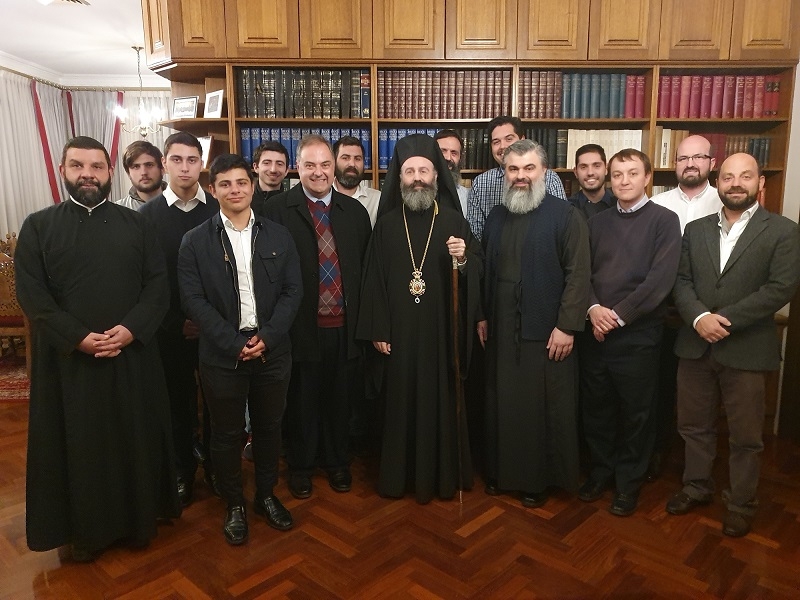
The Library

The library was established with the opening of St Andrew's in... see more
Useful links
Subscribe to our Blog!
Subscribe to our blog written by our Faculty and learn more about your Orthodox Christian faith
Connect With Us
|
|
|
|
Join Our |


.png)
Copyright © 2019 St Andrew's Greek Orthodox Theological College.
All Rights Reserved. | Website Terms & Conditions