- Home
- About us
- Students
- Courses
- Research
- Library
- News & Events
- Gallery
- Contact
- Our Blog
Latest News

Byzantine Ecclesiastical Music 7
MODULE 7: DIVINE LITURGY
Unit Weighting
-
Type of Unit
Intermediate
Prerequisite
Module 1, 2, 3, 4, 5, 6
Academic Staff
Basilios Psilacos, BTh(SCD), BByzMusic, Dip ByzMysic, MTh(Hons)(Thess), BChSc, MCh(Macq). Lecturer
Curriculum Objectives
This Module aims at giving the student the skills for chanting specific hymns that are used in the Divine Liturgy service.
Learning Outcomes
At the end of this unit students will be able to:
- Identify the melody for hymns found in Divine Liturgy service.
- Chant the melody for hymns in the Divine Liturgy, of which some are standard and others are used in the cycle of the 8 modes.
- Chant various hymns that are used at certain times/feasts of the year during the Divine Liturgy.
Content
- Lord, have mercy.
- Antiphons 1 & 2; and variations.
- For the Readings.
- Trisagion hymn (and when Bishop is present).
- Cherubic hymn.
- Liturgika.
- Communion hymn.
- Hymns for the end of the Divine Liturgy (and variations for Eidomen).
- Variations: Axion Esti (with Ode 9), Communion hymn (Weekdays).
- Variations: Divine Liturgy of St Basil.
Assessment Profile
- Demonstrate an understanding of hymns that belong to the Divine Liturgy service, eg. quizzes.
- Perform selected melodies belonging to the Divine Liturgy service, e.g. in class participation, and practical exam.
Schedule
1.5 hrs per week on campus

Enrolments Now Open!
.jpg)
Study at St Andrew's

Subject Areas on Offer
Gallery
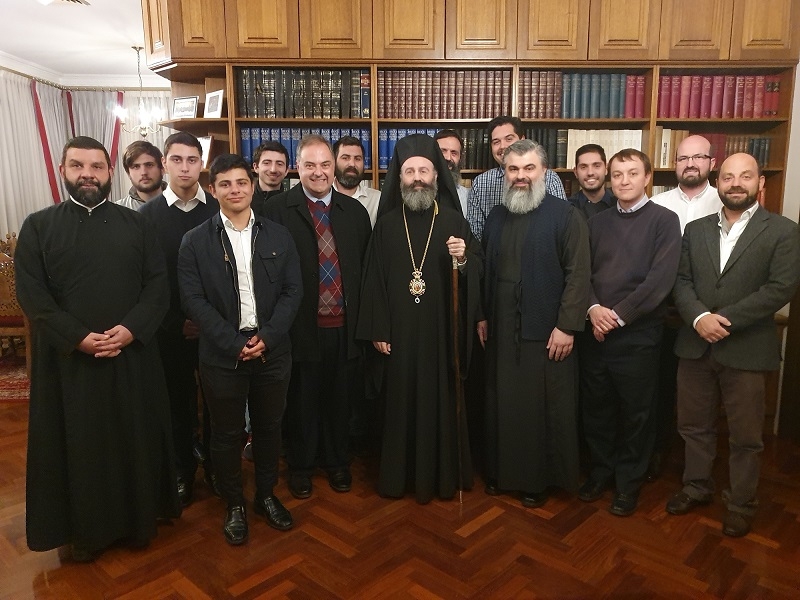
The Library

The library was established with the opening of St Andrew's in... see more
Subscribe to our Blog!
Subscribe to our blog written by our Faculty and learn more about your Orthodox Christian faith
Connect With Us
|
|
|
|
Join Our |


.png)
Copyright © 2019 St Andrew's Greek Orthodox Theological College.
All Rights Reserved. | Website Terms & Conditions