- Home
- About us
- Students
- Courses
- Research
- Library
- News & Events
- Gallery
- Contact
- Our Blog
Latest News

Phronema Volume 39:2, 2024
Phronema Volume 39:2, 2024
Editor, Prof. Angelo Karantonis
|
Contents |
|
| Editorial | vii |
| Prefatory Note, His Eminence Archbishop Makarios of Australia | 1 |
| Honouring a Beacon of Unity and Solidarity: Introducing His All-Holiness Ecumenical Patriarch Bartholomew Address upon the Conferral of an Honorary Doctorate, Philip Kariatlis | 9 |
| Citation | 17 |
| The Necessity of a Synodical Mindset: Theological Keynote Address upon the Conferral, His All-Holiness Ecumenical Patriarch Bartholomew | 19 |
| Speech to Conclude the Ceremony of Conferral, His Eminence Archbishop Makarios of Australia | 27 |
| The Theological Existence and Ecclesial Relevance of the Church, Bishop Silouan of Adelaide | 35 |
| Fractured Beginnings: Christophoros Knetes and the Establishment of the Metropolitanate of Australia and Oceania (1924-1928), Nicholas G Pappas | 53 |
| Church and Culture, Dimitri Kepreotes | 77 |
| The Importance of Orthodox Schools in Australia, Efrosini Stefanou-Haag and Angelo Karantonis | 101 |
| Book Review | 123 |
| Contributors | 127 |
| Information for Authors | 129 |

Enrolments Now Open!
.jpg)
Study at St Andrew's

Subject Areas on Offer
Gallery
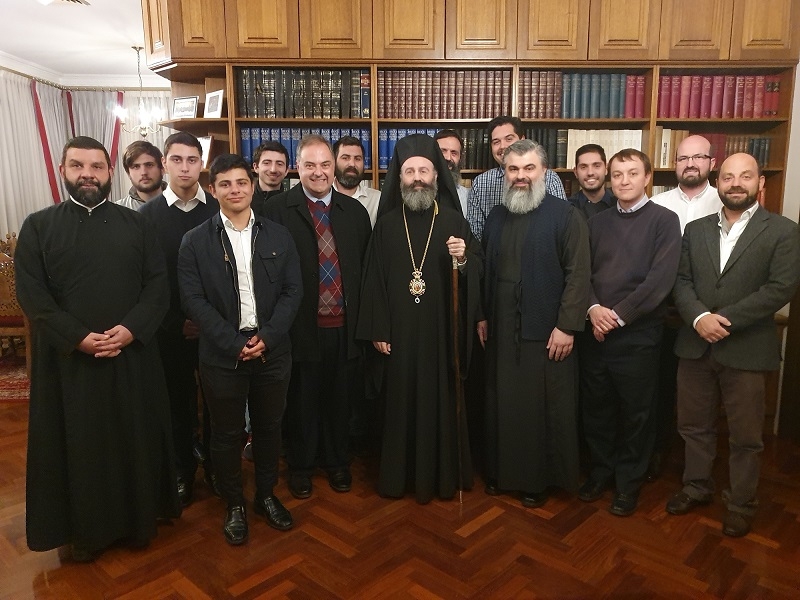
The Library

The library was established with the opening of St Andrew's in... see more
Useful links
Subscribe to our Blog!
Subscribe to our blog written by our Faculty and learn more about your Orthodox Christian faith
Connect With Us
|
|
|
|
Join Our |


.png)
Copyright © 2019 St Andrew's Greek Orthodox Theological College.
All Rights Reserved. | Website Terms & Conditions