- Home
- About us
- Students
- Courses
- Research
- Library
- News & Events
- Gallery
- Contact
- Our Blog
Latest News

Unmasking Scholarship Masquerading as Church History
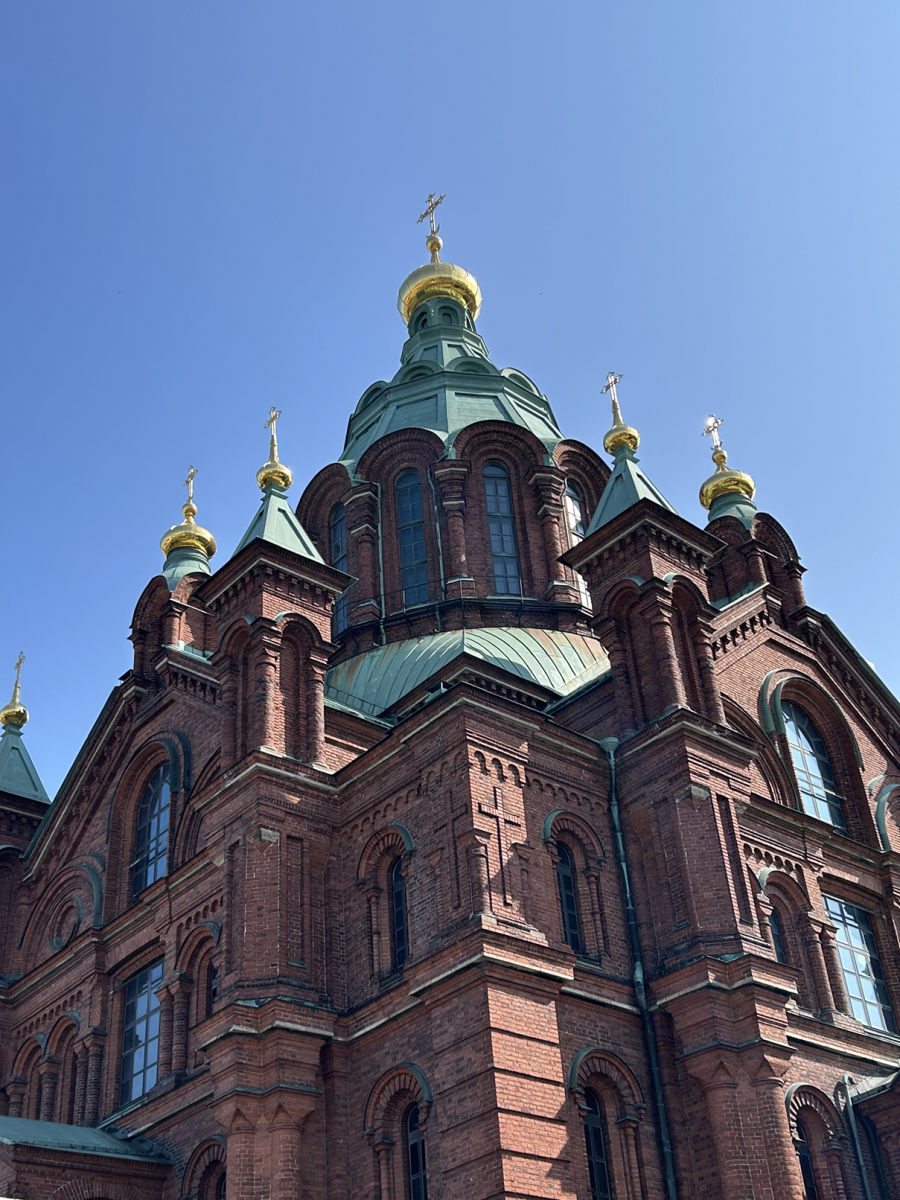
by Dr Andrew Mellas (Senior Lecturer in Church History and Liturgical Studies)
Sadly, in recent times, what is often presented as historical scholarship is, in truth, a fanciful attempt to conceal political motivations that masquerade as erudite explorations of church history. In this jungle of hypocrisy, or perhaps simplistic ignorance, the scholar misunderstands and misrepresents the significant difference between ecclesiastical autonomy and autocephaly in the Orthodox Church, defends blatant violations of international law, such as Russia’s invasion of Ukraine, and confuses Finland with the Baltic states. However, such distinctions are rendered nugatory in the scholar’s quest to paint a sordid scene of religious exploitation that supposedly seeks to foment Russophobia.
Of course, contrary to the scholar’s assertions, Estonia, Finland and Latvia never received autocephaly, but autonomy. The autonomous status was actually first granted to Estonia, Finland and Latvia by St Tikhon (Patriarch of Moscow from 1917 to 1925) because he understood new political realities made direct governance from Moscow impracticable— it could no longer care for these areas.Contact with Moscow proved impossible and, after Patriarch Tikhon was imprisoned for publicly condemning the Bolshevik government’s confiscation of Church valuables, in 1923, Estonia and Finland sought refuge in Constantinople, and in 1936, Latvia followed suit. Over time, the jurisdiction of the Ecumenical Patriarchate in Estonia and Latvia was dissolved because of Soviet occupation, but Finland retained its autonomy since the country remained independent.
Indeed, as the clock strikes midnight at the masquerade ball, the so-called scholar does the unthinkable to avoid being unmasked. He alleges that the Ecumenical Patriarchate did not have the canonical authority to grant autocephaly to the Orthodox Church of Ukraine. He fails to remember that the Metropolis of Kyiv historically belonged to the Ecumenical Patriarchate of Constantinople. Moscow’s jurisdiction over Kyiv is questionable to say the least. Ultimately, it is the Ecumenical Patriarchate that retains canonical responsibility for Ukraine, and its decision to grant autocephaly in modern times is both historically and canonically justified.
As Archbishop Makarios of Australia has categorically shown, after political union between parts of Ukraine and Moscow (1654), Moscow pressured Constantinople to transfer Kyiv, seeking to align ecclesiastical jurisdiction with its expanding political authority and to consolidate its influence over the newly acquired territories. In 1686, Patriarch Dionysios IV issued letters permitting Moscow to ordain the Metropolitan of Kyiv. This permission was given due to political and military difficulties. However, this was not a transfer of jurisdiction; it was a limited delegation of ordination rights. The Metropolitan of Kyiv was required to commemorate the Ecumenical Patriarch first, Kyiv retained significant autonomy and Moscow was not granted the right to elect or absorb the metropolis.
Regrettably, it is unsurprising that this political activist masquerading as a scholar has emerged.Earlier this year, Russia’s Foreign Intelligence Service viciously attacked Ecumenical Patriarch Bartholomew, portraying him as the antichrist who is seeking to remove Russian Orthodoxy from the Baltic states. Even less surprising is the fact that Moscow Patriarch Kirill has failed to publicly distance himself from this incident. Of course, those who support the war in Ukraine will ultimately be accountable before God.
St Andrew’s Greek Orthodox Theological College stands in solidarity with His All Holiness, Ecumenical Patriarch Bartholomew in the wake of this vile propaganda. As befits the spiritual leader of the Orthodox Church, his gaze is firmly fixed on the salvific truth of Christ; not politics.
| About the Author |
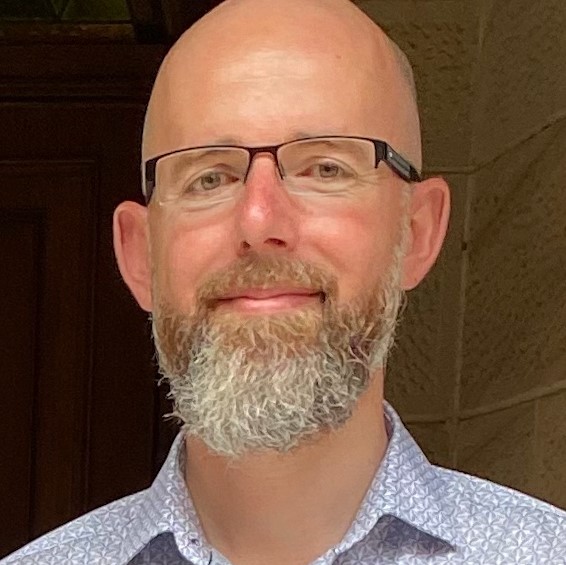
Dr Andrew Mellas Senior Lecturer in Church History and Liturgical Studies Andrew Mellas is Senior Lecturer in Byzantine History & Liturgical Studies at St Andrew's. In 2018, he completed a Doctor of Philosophy at the University of Sydney on the emotion of compunction in Byzantium. Andrew has published various chapters and articles on the history of Byzantium, liturgics and hymnody in peer-reviewed publications and journals, as well as presenting papers on these subjects at international conferences. He is also a member of the Australian Byzantine Choir... |
Useful links
Subscribe to our Blog!
Subscribe to our blog written by our Faculty and learn more about your Orthodox Christian faith
Connect With Us
|
|
|
|
Join Our |


.png)
Copyright © 2019 St Andrew's Greek Orthodox Theological College.
All Rights Reserved. | Website Terms & Conditions