- Home
- About us
- Students
- Courses
- Research
- Library
- News & Events
- Gallery
- Contact
- Our Blog
Latest News

Phronema Volume 20, 2005
Phronema Volume 20, 2005
Editor, Assoc. Prof. James A. Athanasou
| Contents | |
| Priorities in True Culture, Archbishop Stylianos (Harkianakis) | 1 |
|
Towards Union with God: Theology of Light, Prayer and Contemplation between East and West in the Medieval Ages, Kyrillos Zisis |
9 |
| "In Spirit and Truth": The Foundations of Worship, Chrysostom Nassis | 25 |
| Is Church Law, Law? A Comparative Reading of Ecclesiastical Jurisprudence in Rome and Byzantium, Andrew Mellas | 41 |
| The Bishop of the Heretics of Constantinople Visits the West, Yvette Paiement Debergue | 61 |
| The Anthropology of St Nectarios: Insights from a Sketch of the Human Person, Dimitri Kepreotes | 77 |
| Book Reviews | 93 |
| The College | 101 |
| Research and Professional Activities | 109 |
| Cumulative Contents | 124 |
| List of Reviewers | 131 |
| Information for Authors | 132 |

Enrolments Now Open!
.jpg)
Study at St Andrew's

Subject Areas on Offer
Gallery
The Library

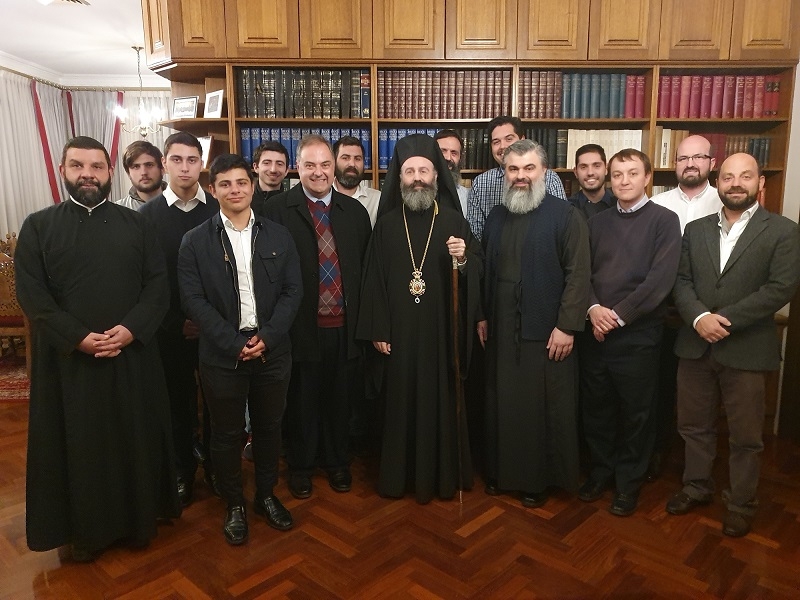
The library was established with the opening of St Andrew's in... see more
Useful links
Subscribe to our Blog!
Subscribe to our blog written by our Faculty and learn more about your Orthodox Christian faith
Connect With Us
|
|
|
|
Join Our |


.png)
Copyright © 2019 St Andrew's Greek Orthodox Theological College.
All Rights Reserved. | Website Terms & Conditions