- Home
- About us
- Students
- Courses
- Research
- Library
- News & Events
- Gallery
- Contact
- Our Blog
Latest News

Phronema Volume 3, 1988
Phronema Volume 3, 1988
Editor, Dr Guy Freeland
| Contents | |
| Editorial | 2 |
|
Dangers of Idealism in Theology and Spirituality, Archbishop Stylianos (Harkianakis) |
3 |
| How we Arrive at Moral Judgments: An Orthodox Perspective, Georgios Manztaridis | 11 |
| Sources of Patristic Theology, John Chryssavgis | 21 |
| The Valentinian Gnostic Interpretative and Exegetical Processes: The Case of Ptolemy's Exegesis of the Johannine Prologue, Themistocles Adamopoulo | 31 |
| Mount Athos: Its Significance in the Musical Tradition of Byzantium, Dimitri Conomos | 49 |
| Reports | 61-69 |
| Essay Review | 71 |
| Book Reviews | 81 |
| The College | 83 |
| Our Contributors | 87 |

Enrolments Now Open!
.jpg)
Study at St Andrew's

Subject Areas on Offer
Gallery
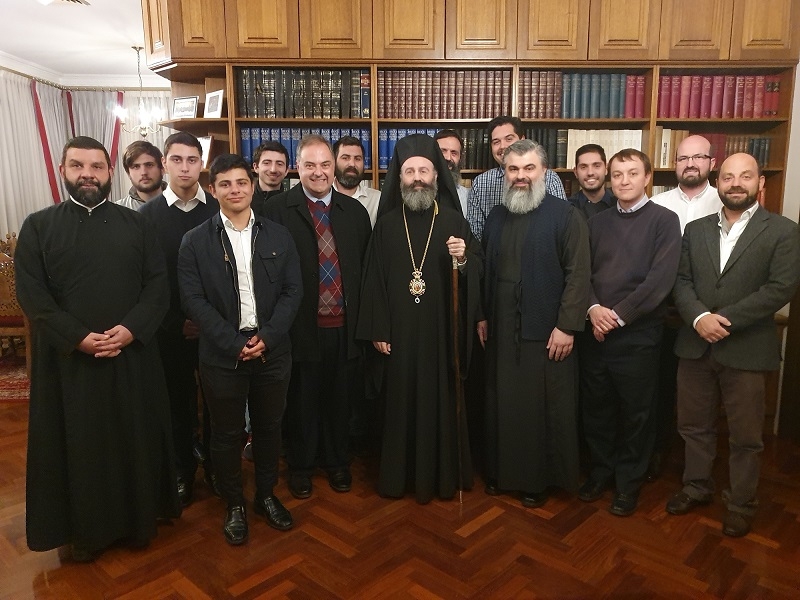
The Library

The library was established with the opening of St Andrew's in... see more
Useful links
Subscribe to our Blog!
Subscribe to our blog written by our Faculty and learn more about your Orthodox Christian faith
Connect With Us
|
|
|
|
Join Our |


.png)
Copyright © 2019 St Andrew's Greek Orthodox Theological College.
All Rights Reserved. | Website Terms & Conditions