- Home
- About us
- Students
- Courses
- Research
- Library
- News & Events
- Gallery
- Contact
- Our Blog
Latest News

Phronema 40:1, 2025
Phronema 40:1, 2025
Editor, Prof. Angelo Karantonis
|
Contents |
|
| Editorial | vii |
| Byzantine Catanyctic Hymns as Laments: The Canons of Joseph the Hymnographer, Bishop Damaskinos (Olkinuora) of Haapsalu | 1 |
| Toward an Oriental Orthodox Understanding of the (Un)createdness of Grace: A Patristic Approach Informed by Liturgical Theology, Andrew N. A. Youssef | 33 |
| Divine Participation: The Indwelling of the Spirit in Father Mattá Al-Miskīn’s Theology against the Backdrop of the Cyrilline Legacy, Wagdy Samir | 57 |
| Theos Kyrios, The Lord is God: Word-Order and Meaning, John A. L. Lee | 89 |
| Pleasure and Pain in the Analysis of St Maximus, According to the Quaestiones ad Thalassium, Christoph Schönborn and Margaret Beirne | 107 |
| Contributors | 125 |
| Chronicle of Faculty Activities | 127 |
| Information for Authors |
141 |

Enrolments Now Open!
.jpg)
Study at St Andrew's

Subject Areas on Offer
Gallery
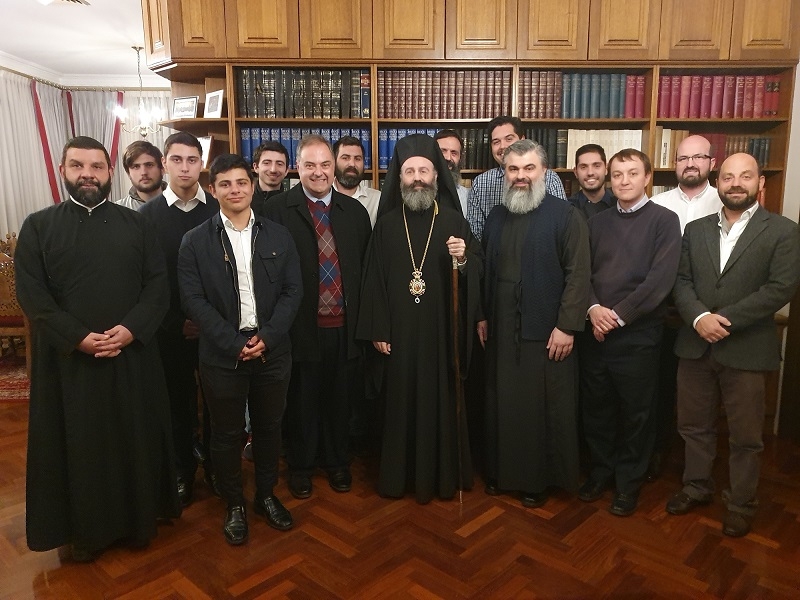
The Library

The library was established with the opening of St Andrew's in... see more
Useful links
Subscribe to our Blog!
Subscribe to our blog written by our Faculty and learn more about your Orthodox Christian faith
Connect With Us
|
|
|
|
Join Our |


.png)
Copyright © 2019 St Andrew's Greek Orthodox Theological College.
All Rights Reserved. | Website Terms & Conditions