- Home
- About us
- Students
- Courses
- Research
- Library
- News & Events
- Gallery
- Contact
- Our Blog
Latest News

BYZANTIUM: EMPIRE OF NEW ROME
H7230A
Unit Weighting
9 credit points
Type of Unit
Intermediate
Prerequisite
H7110A History of the Early Church
Academic Staff
Rev. Anastasios Bozikis, BCom (UQ 1990), BTh (SCD 1995), MTh (Sydney 1997)
Curriculum Objectives
This course unit examines the historical, cultural and theological factors of the Eastern Roman Empire, or Byzantium, generally from the age of Constantine the Great until the period of the ‘Triumph of Orthodoxy’ (or, from the 4th to 9th centuries), as well as the empire’s relations with its neighbours.
Learning Outcomes
At the end of this unit students will be able to:
- distinguish the various social, cultural and religious factors both within the Byzantine empire and its immediate cultural context from the 4th to 9th centuries.
- demonstrate an understanding of historical and historiographical trends relating to this period.
- illustrate the capacity to critically interpret primary sources from this period.
- exhibit the capacity to critically interpret the secondary sources relating to this period.
- apply the key contributions of leading figures and significant events in this period to the Church’s present mission.
Content
- Studying the Byzantine empire in context; methodology and historiography.
- Constantinople, the imperial cult, and the ecumenical councils.
- Byzantine historians and historiography.
- Religious, cultural and social aspects of the Byzantine state.
- Byzantium and its neighbours.
- Aspects of an emerging Byzantine worldview; landmarks and threats.
- The ‘triumph of Orthodoxy’ and its implications.
Assessment Profile
Face to face
- Tutorial presentation (12 mins) + one page write-up (650 words). Value: 30%
- Essay (2,000 words). Value: 50%
- Exam (30 mins). Value: 20%
Distance
- Article or chapter review (800 words). Value: 20%
- Primary source analysis (1,200 words). Value: 30%
- Essay (2,000 words). Value: 50%
Schedule
3hr lecture per week on campus, or via distance education

Enrolments Now Open!
.jpg)
Study at St Andrew's

Subject Areas on Offer
Gallery
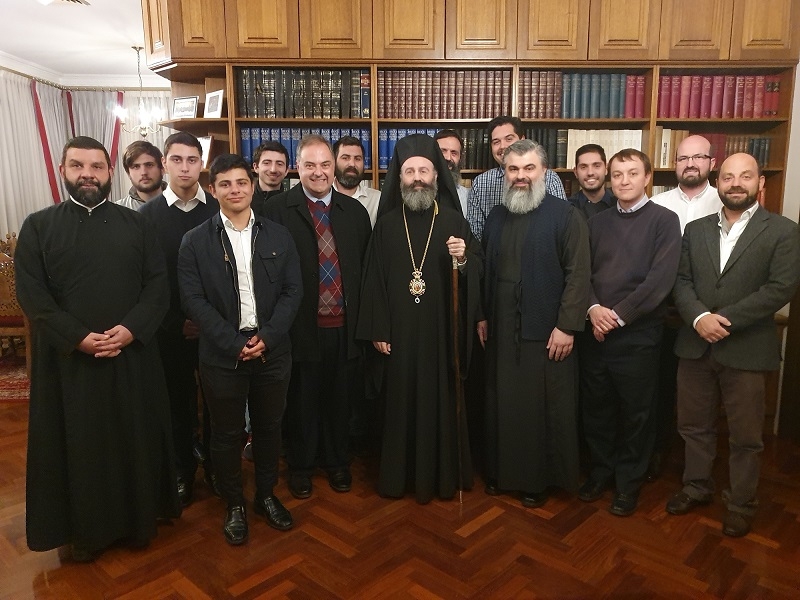
The Library

The library was established with the opening of St Andrew's in... see more
Useful links
Subscribe to our Blog!
Subscribe to our blog written by our Faculty and learn more about your Orthodox Christian faith
Connect With Us
|
|
|
|
Join Our |


.png)
Copyright © 2019 St Andrew's Greek Orthodox Theological College.
All Rights Reserved. | Website Terms & Conditions